Process, Costs & Planning · 9 min read
Interior Design from a Single Source: One Contact, One Responsibility
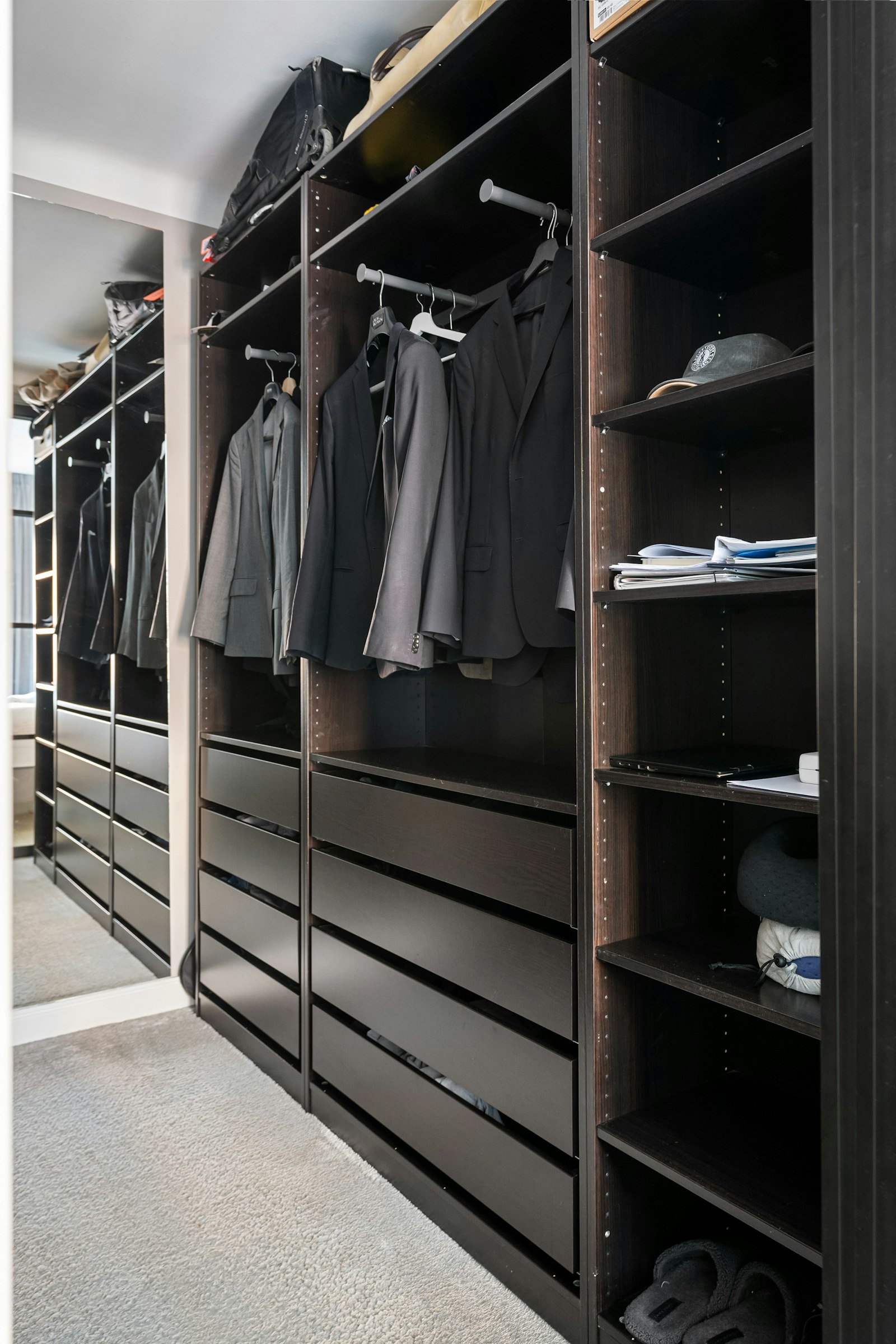
You stand in front of a niche, the wardrobe is a centimetre and a half too wide, and the joiner points to the bricklayer, the bricklayer to the plan, and the plan to the showroom. Now imagine a project in which one call settles it, the same day. Picture a couple in the Wieden district. Six years ago they renovated their first flat with a kitchen showroom, a joiner for the wardrobes, a tiler, an electrician and a lot of goodwill. In the end the kitchen did not quite fit its niche, because the plaster was thicker than planned. It was solved with a filler panel that still bothers them today. Now the next flat is coming up, bigger, older, more demanding. Their most important condition: this time there should be someone who stands behind everything.
Contents
- What interior design from a single source means
- The gap between plan and building site
- What changes for you in concrete terms
- Separate contracts or a single source: the comparison
- The workshop in the background: Tischlerkultur since 1935
- Single source does not mean doing everything yourself
- Who the model suits and when it suits less
- Frequently asked questions
- What happens next
What interior design from a single source means
Interior design from a single source is a model in which design, detailed planning, coordination and execution are the responsibility of one coordinated team. Instead of buying individual services from different providers and coordinating them yourself, you have one partner from the first line to handover.
At Richard Atelier it looks like this: the studio plans and curates, that is, concept, lighting, materials, furnishing and coordination of all trades. The joinery Tischlerkultur makes and installs the bespoke built-ins, from the kitchen through wardrobes and dressing rooms to vanity units and panelling. The two belong together, led by Richard Dobrohruschka, who comes from a Viennese joinery tradition. The formula: design, planning and execution from one coordinated hand.
This is not the same as a general contractor, who mainly bundles construction services. The starting point here is planning, that is, the question of how you want to live. Execution follows that planning, and the planning knows from the outset what is possible in the workshop. How such a project runs phase by phase is in the article Working with an interior designer.
Where do projects usually go wrong?
The gap between plan and building site
Most problems in renovations arise neither in the design nor in the workshop, but in between. A plan is an intention. The building site is reality. In between lie hundreds of decisions that someone has to make.
A typical example is the dimension of a niche. On the plan it is 120 centimetres wide. After plastering it is 118.5. Who tells the joiner? When? And who decides whether the wardrobe gets narrower or the wall is reworked? When planning and execution are separate, this information often passes through three stations, and each can lose it.
For the couple in Wieden, exactly that happened. None of those involved worked badly. But nobody was responsible for the handover between the trades. That is the gap that a single-source model closes.
The mistakes of a building site rarely lie in the trades. They lie in the joints between them.
What doing nothing costs. Coordinate it yourself, and you pay with evenings and weekends: calls between trades, photos of niches, the question who said what. When something goes wrong, you pay with a filler panel you look at for years. It is rarely one big failure. It is a hundred small waits, and each one is yours.
What changes for you in concrete terms
For clients, the single-source model has very practical effects. You notice these points most clearly in the day-to-day of the project:
- One point of contact. You call one person, not five. Questions are answered, not passed on.
- One line of responsibility. If something does not fit, there is no back and forth between trades. It gets solved.
- More precise details. The workshop is involved in the planning from the start. What is drawn can also be built.
- More stable deadlines. Fabrication is coordinated with progress on site, not with a fictitious calendar.
- Transparent budget. Planning and execution talk about the same figures. Changes are translated into costs immediately.
- Less time spent by you. You do not coordinate yourself but decide at fixed points.
Deadlines become more stable for a simple reason. If the workshop knows the screed is delayed by a week, it shifts fabrication accordingly, instead of storing finished elements or installing them on an unfinished site. How a realistic schedule is built up is in the article on the timeline of a flat renovation.
An example from day-to-day work
Suppose that in the couple's new project in Wieden, opening up a wall reveals a chimney breast behind the old plaster that was not on the plan. With separate contracting, this would set off a chain of phone calls: designer, bricklayer, joiner, clients. From a single source, one appointment on site with the designer and the master joiner is enough. The same day it is decided that the library wall will enclose the chimney breast. The joiner draws the adjustment, the clients approve it by photo, and the schedule stays unchanged.
Is that always the better route?
Separate contracts or a single source: the comparison
Both routes have their place. The table shows the main differences from the clients' point of view.
| Aspect | Separate contracts | Single source |
|---|---|---|
| Point of contact | several, one per trade | one for the whole project |
| Coordination | by you or an additional site manager | part of the service |
| Interfaces | many, responsibility often unclear | coordinated internally |
| Details | designer and workshop work separately | workshop plans along |
| Deadlines | depend on everyone's coordination | managed centrally |
| Price comparison | individual trades easy to compare | overall package, items transparently itemised |
| Your time commitment | high | low, decisions at fixed points |
An honest note: with separate contracting, individual trades are easier to put out to tender against each other, which can look cheaper for single items. But the costs of coordination, waiting times and rectification appear in no quote. How the costs of a complete concept are made up is in the article What does a complete interior concept cost?.
Behind the model stands a workshop.
The workshop in the background: Tischlerkultur since 1935
Behind Richard Atelier stands a workshop with a history. The joinery was founded in 1935 by Leopold Dobrohruschka in Vienna and is run today as Tischlerkultur by the third generation. Knowledge of how a piece of furniture is built, how wood moves and how a fitting lasts for decades flows directly into the planning.
For you this has consequences you can see in the finished room. A wardrobe wall meets the ceiling flush, even when the ceiling in an Altbau (the pre-1945 Viennese apartment building) is not straight. A kitchen front runs on with the joint of the wall unit next to it. A vanity unit takes up exactly the height that suits your body height. Details like these do not come by chance but because designer and joiner sit at the same table.
Imagine opening the wardrobe doors ten years from now: they close with the same soft click as on the first day, and the ceiling gap is a line you cannot find. Responsibility also continues beyond handover. Whoever built a piece of furniture knows every screw in it. If after some years a drawer needs adjusting or a fitting replacing, there is no manufacturer who can no longer be reached, and no doubt about who is responsible.
Which furniture is worth having made to measure and where a system is enough is in the article Bespoke fitted wardrobe or modular system. The question of the right wood is answered, from a joinery's point of view, in the article Veneer or solid wood?. How we plan wardrobes and dressing rooms is on the fitted wardrobes page.
Does a single source then mean we do it all?
Single source does not mean doing everything yourself
A misunderstanding we often meet: single source does not mean that one firm carries out every trade itself. Electricians, plumbers, tilers and painters are specialist firms in their own right. The difference is that they work to a coordinated schedule, with a common plan and one person responsible who holds the threads together.
It is similar with products. For kitchens we plan with Italian kitchen manufacturers, for sliding doors with glass systems, for wardrobes with wardrobe systems, for worktops with Cosentino Dekton and for extraction with downdraft hobs, and for upholstered furniture, lights and bathroom ceramics we choose specialist makers. How we select manufacturers is in the article Italian manufacturers.
The combination of branded products and bespoke work is often the strongest solution. A kitchen from an Italian manufacturer, complemented by a tall-unit wall and a bench from our own workshop, combines precision with adaptation to the room. The trade-off is described in the article Joinery kitchen or branded kitchen?. On the fitted kitchens page you will find our approach to kitchens.
One hand does not mean one tool. It means one head that knows all the tools.
Who the model suits and when it suits less
The single-source model is particularly suitable when several rooms are affected, when bespoke built-ins play a large part, when you have little time for coordination, or when, like the couple in Wieden, you have already experienced what separate responsibilities mean. For a complete concept for the home it is almost essential.
It is less necessary for very small, clearly defined projects, such as replacing a single wardrobe or painting a wall. Whoever is in the trade and gladly takes on the coordination can also do well with separate contracting. In the initial consultation we say openly which route makes sense for your project.
For the couple in Wieden, the scenario would look like this: a kitchen with an island, a dressing room, a new bathroom and a library wall, and one point of contact from the first sketch to handover. The niche for the kitchen is 118.5 centimetres wide, and so is the kitchen. If you would like to get to know the people behind this approach, you will find them on the Team page.
Frequently asked questions
What does planning and execution from a single source mean?
It means that one coordinated team is responsible for design, detailed planning, coordination of the trades and execution. At Richard Atelier the studio plans and the joinery Tischlerkultur makes and installs the bespoke built-ins. You have one point of contact from the first line to handover, and you know whom to call.
Is interior design from a single source more expensive?
Not necessarily. Individual items can look cheaper with separate contracting, but coordination effort, waiting times and rectification appear in no quote there. From a single source these friction losses are reduced, and the budget is managed transparently by item.
Is that the same as a general contractor?
Not quite. A general contractor mainly bundles construction services. With planning and execution from a single source, planning comes first and execution follows it. We clarify the contractual arrangements project by project.
Does Richard Atelier carry out all the trades itself?
No. The bespoke built-ins are made and installed by our own joinery Tischlerkultur. Electrics, plumbing, tiling and painting are handled by established specialist firms, coordinated in a shared schedule.
Can I still bring in my own tradespeople or furniture?
In many cases, yes. What matters is that the coordination is clearly regulated, so responsibilities do not blur. Existing furniture that matters to you is included in the planning from the start anyway.
For which projects is the model particularly worthwhile?
Especially for projects with several rooms, many bespoke built-ins and tight deadlines. For a complete concept for a flat or house it is the obvious solution. For very small individual projects it is less decisive, and we tell you so honestly.