Kitchen · 8 min read
Joinery Kitchen or Branded Kitchen? What Really Decides the Choice
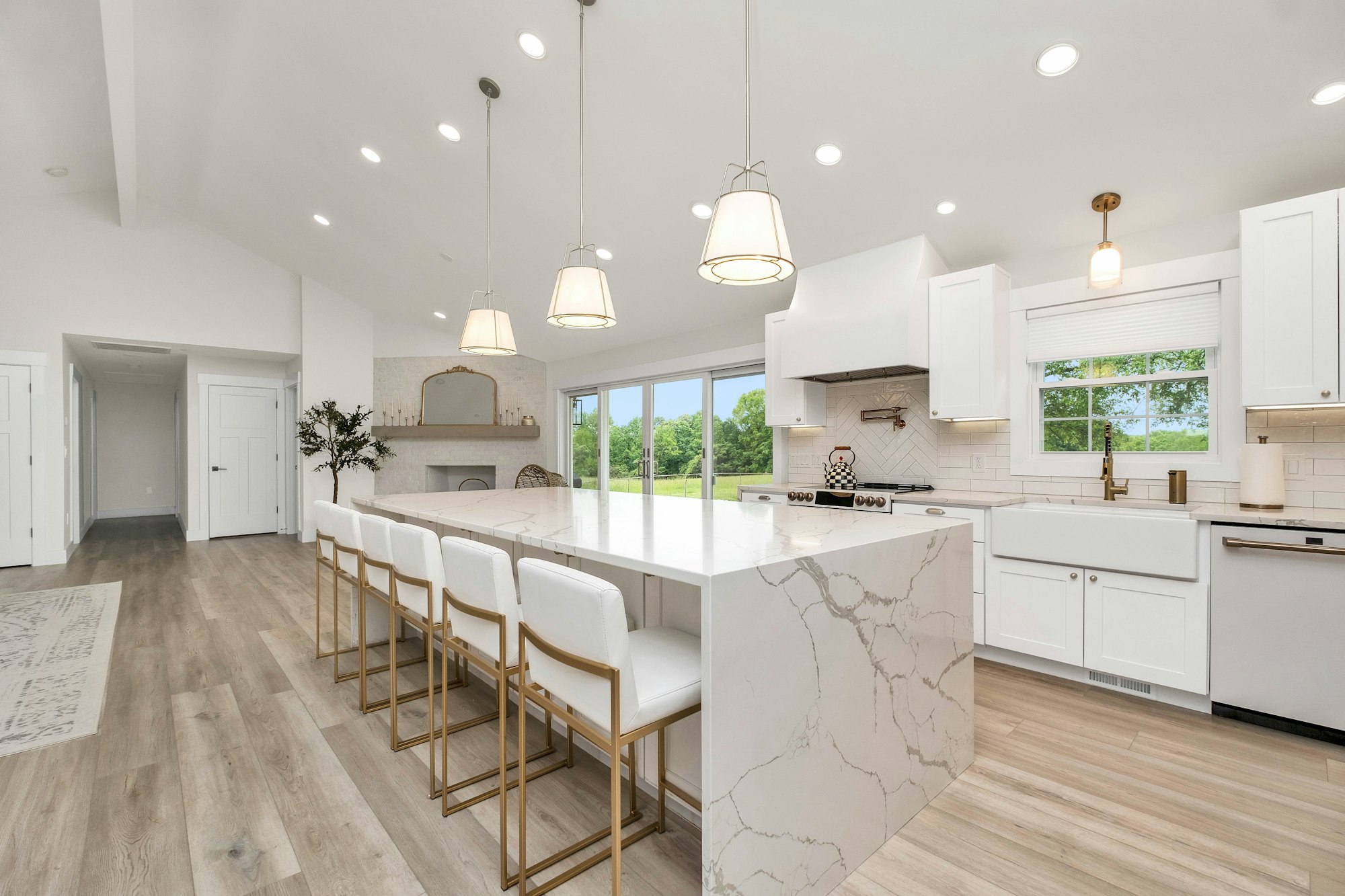
You stand in the second showroom with a sample of oak veneer in one hand and a brochure in the other, and you realise that you like both. The question is no longer which is better. The question is what you want to feel when you walk into your kitchen on a Sunday morning.
Picture a couple who have bought an attic flat in the ninth district. Sloping ceilings on two sides, a dormer window, an old chimney breast that is to stay. At the weekend they visited two showrooms. In one stood Italian kitchens with flawless fronts and well-considered details. In the other, a joiner talked about oak from the Waldviertel and about drawers that reach exactly to the chimney. At the first meeting they ask: "So which is better?" The honest answer is: that depends on what your kitchen has to do. And sometimes it is not either/or.
Contents
- Two routes to a kitchen: defining terms
- The direct comparison
- When the joinery kitchen plays to its strengths
- When the branded kitchen is the stronger choice
- The combination: often the answer
- Costs and schedule: what you can realistically expect
- How to make the decision
- Frequently asked questions
- What happens next
Two routes to a kitchen: defining terms
A joinery kitchen is a kitchen that a joinery designs for a particular room or builds to a plan. Carcass, fronts, drawers and connections are built to the dimensions of the room. Material, finish and construction can be freely chosen, within what makes sense as craftsmanship.
A branded kitchen is a kitchen from a manufacturer offering a consistent system: carcasses in a fixed grid, front ranges, handles, interior fittings, worktops. With high-quality Italian manufacturers this system is very flexible and design-led. Many dimensions and special solutions are possible, but within the system.
We know both sides well. Richard Dobrohruschka comes from a Viennese joinery tradition founded in 1935 by Leopold Dobrohruschka and now continued in its third generation as the joinery Tischlerkultur. At the same time we regularly plan with Italian branded kitchens. So we have no interest in talking either solution down. What interests us is what suits your room.
The question is not who builds the kitchen. The question is what the kitchen should do in this room for these people.
The direct comparison
The following table summarises typical differences. It is a guide, not a rule: good brand manufacturers offer many special solutions, and good joiners work with precise fitting systems.
| Criterion | Joinery kitchen | Branded kitchen |
|---|---|---|
| Fit to the room | to the millimetre, even with sloping ceilings, niches, crooked walls | within the system grid, special sizes possible, filler pieces usual |
| Choice of materials | very free: solid wood, veneer, lacquer, metal, stone | large but defined range |
| Design | individual, depends on the planning | clear design language of the manufacturer |
| Manufacturing precision | high, depends on the workshop | very high and consistent thanks to series production |
| Interior fittings | system fittings plus individual dividers | mature, coordinated systems |
| Schedule | depends on workshop capacity | depends on the manufacturer's lead times |
| Connection to other fitted pieces | kitchen, cupboards, wall panelling from one hand | kitchen in the system, other furniture often separate |
| Reordering and spare parts | through the joinery | through manufacturer and dealer, as long as the range runs |
Where do these differences matter most?
When the joinery kitchen plays to its strengths
The joinery kitchen has the advantage where the room is unusual or where the kitchen is to merge with other fitted pieces into one whole. In Viennese Altbau buildings that is more often the case than one might think.
Typical situations for a joinery kitchen:
- Sloping ceilings, dormers and attic flats, where system grids reach their limits.
- Altbau niches, piers and chimney breasts that are to be integrated rather than planned away.
- Floor-to-ceiling solutions in rooms more than three metres high that are to be used up to the ceiling.
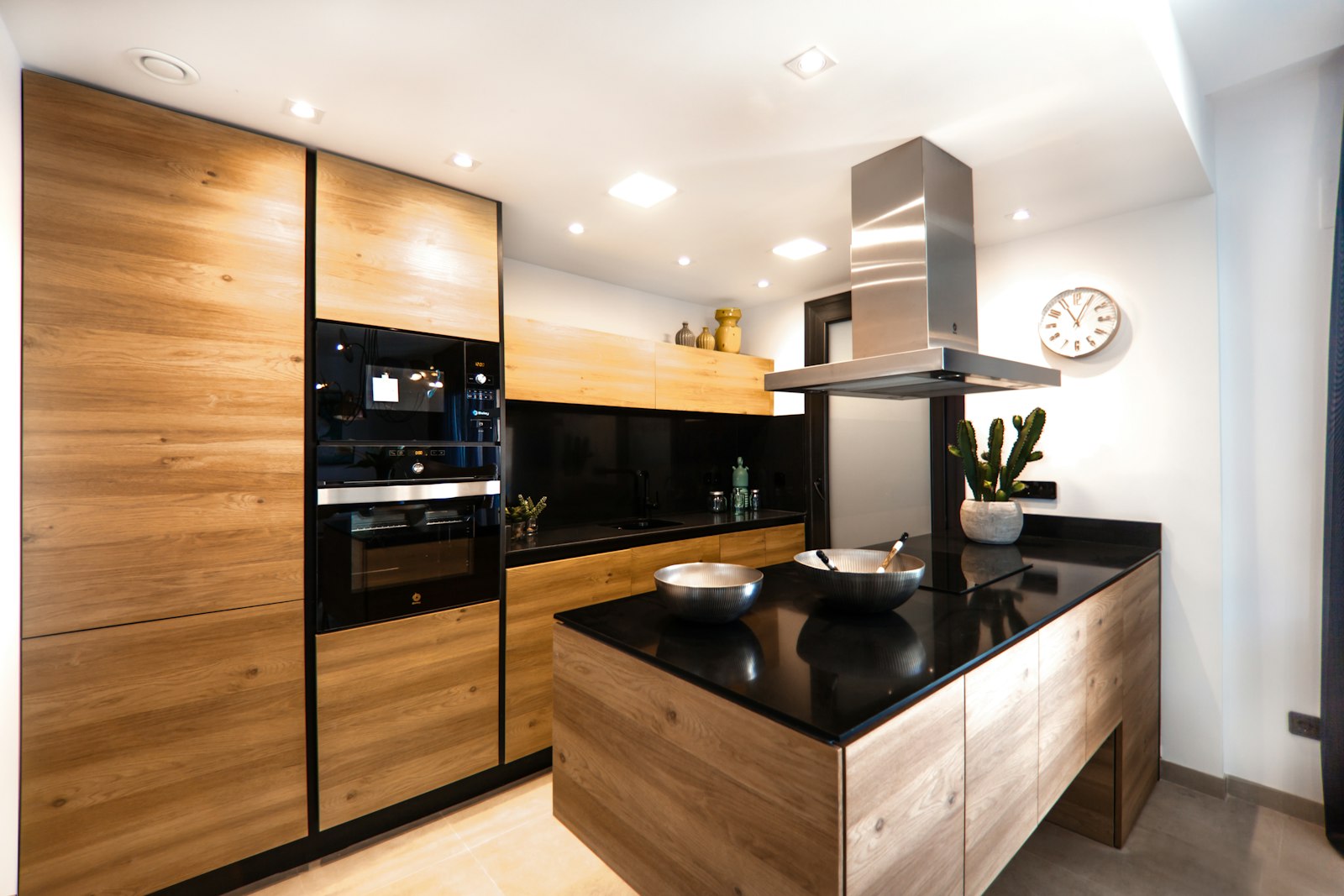
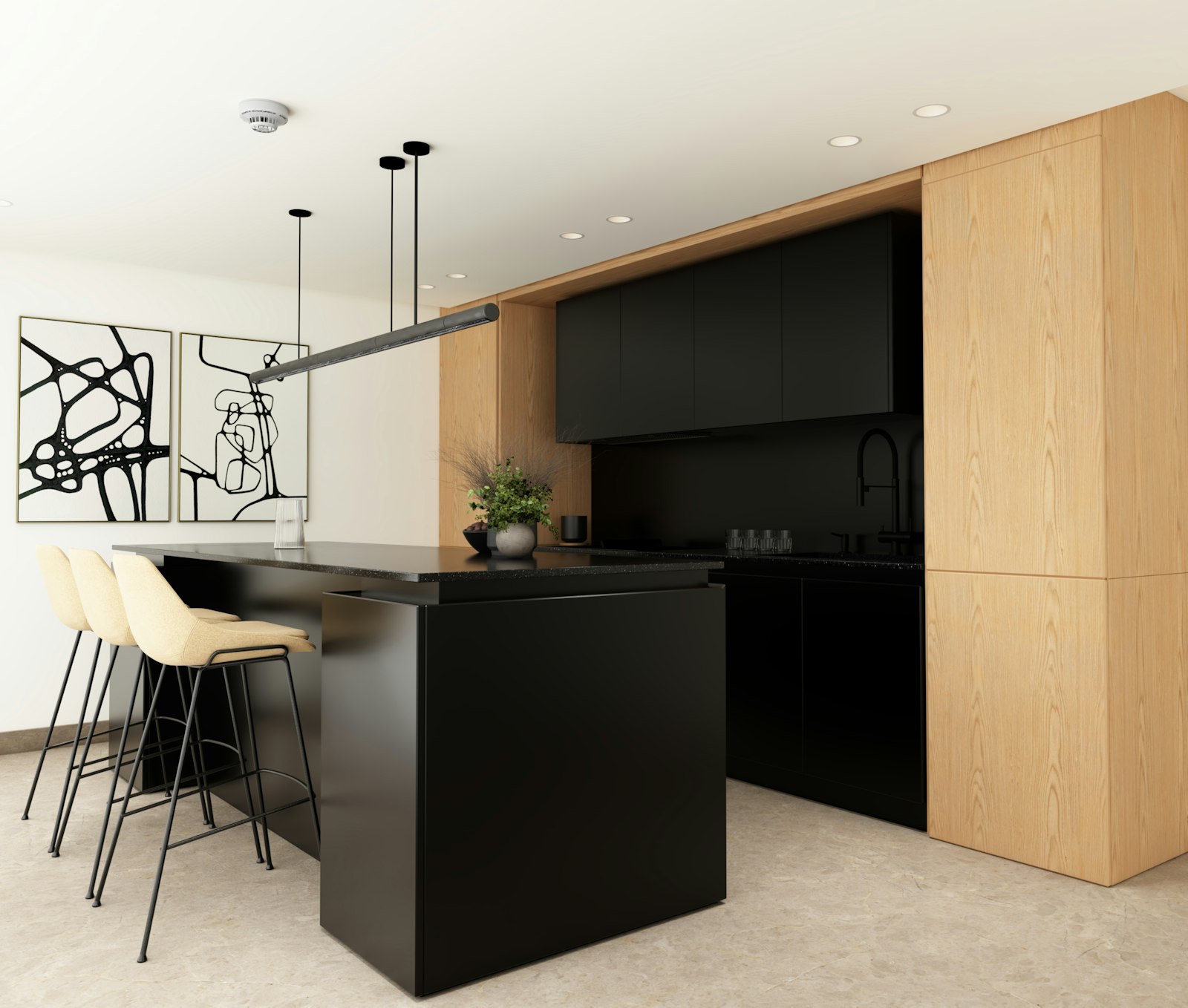
- Continuous materials: when the oak of the kitchen carries on in the wall panelling, the fitted cupboard and the wardrobe.
- Unusual wishes: a brass worktop, a front of smoked wood, a drawer exactly 23 centimetres wide.
For our couple in the attic, much spoke for the joinery kitchen. The sloping ceilings would have required many filler pieces and trims with a system range, and the chimney breast would have become a foreign body. In the joinery kitchen it became part of the kitchen wall. Imagine the morning light through the dormer, falling on warm oak that wraps around the old brickwork as if the room had been built for it. Which woods suit this and how wood ages is described in the article Real wood in interiors. The question of veneer or solid wood is answered by the article Veneer or solid wood.
When the branded kitchen is the stronger choice
The branded kitchen plays to its strengths where a clear design, a mature system and very even manufacture take priority. Large Italian manufacturers invest heavily in development: in fittings, in surfaces, in details such as grip rails or integrated lighting that have been refined over years.
Typical situations for a branded kitchen:
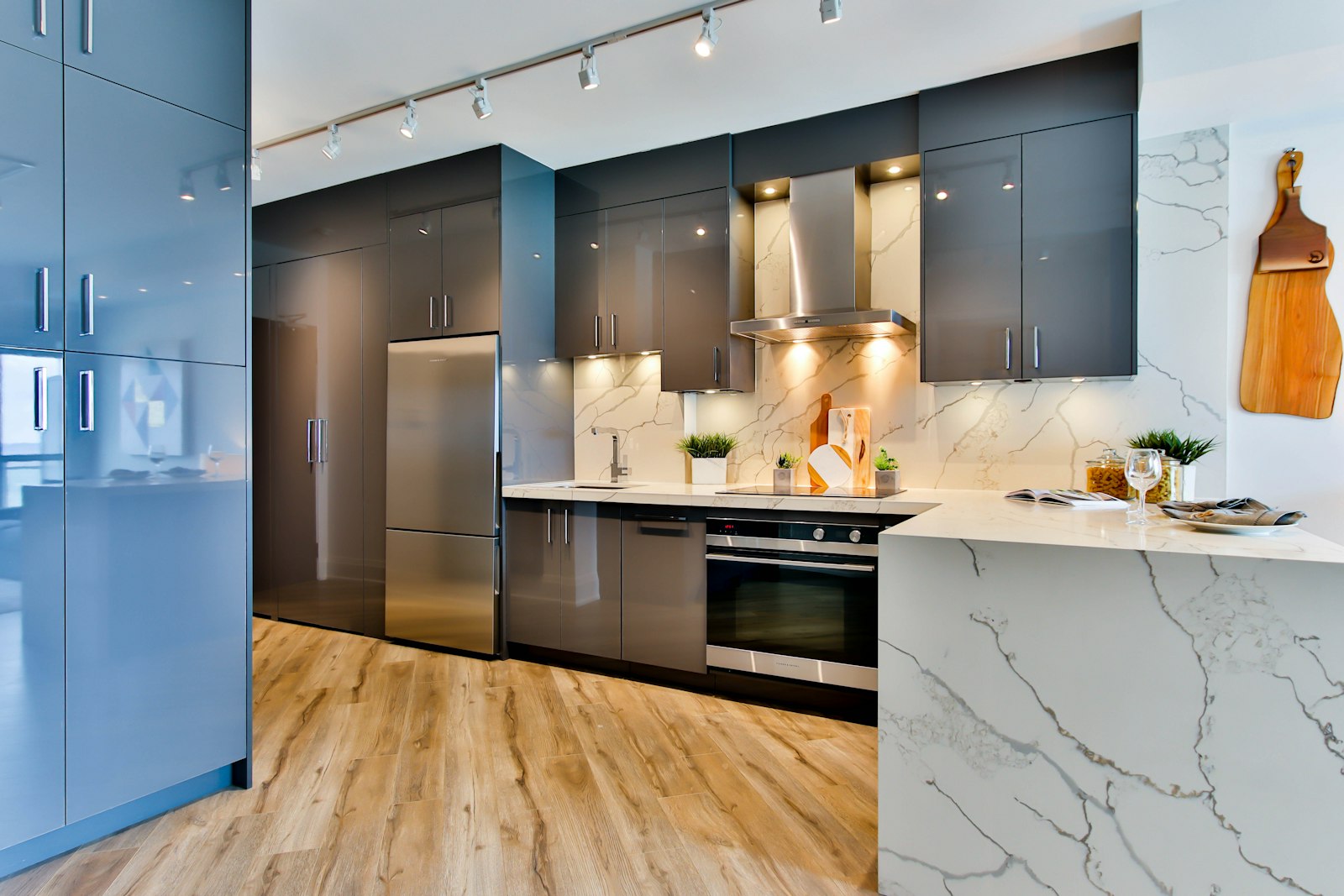
- Clear, right-angled rooms in new builds or renovated Altbau flats, where the system grid works out well.
- A particular design expression that is exactly one manufacturer's range. Anyone looking for a kitchen as an architectural object will find a clear stance in a kitchen designed as architecture.
- A budget that should combine design and sense: branded kitchens with a defined budget offer Italian design with a sense of proportion on price.
- A combination of craft and industrial precision, such as kitchens between craft and industry from the Veneto.
- Surfaces that a joiner does not make himself, for instance certain lacquers, glass fronts or metal finishes with industrial consistency.
One advantage of the branded kitchen is predictability. In the showroom you see what you will get. With a joinery kitchen we therefore work with samples, drawings and visualisations, so that this advantage is not lost. And what if neither route is quite right?
The combination: often the answer
In many of our projects the answer is neither purely joinery nor purely brand. Because Richard Atelier plans and Tischlerkultur builds, we can join both worlds. That means, for example:
- Branded kitchen as the core, joiner for the edges: The kitchen run comes from the manufacturer; the wall panelling, the niche for the chimney breast and the shelf over the door are made by the joinery to match.
- Joinery kitchen with branded elements: Carcasses and fronts are made in the workshop; fittings and interior come from established system manufacturers.
- Kitchen from the range, island as a one-off: The wall run in the system, the kitchen island as joinery work with a solid top.
- One front, two origins: The joinery makes fitted cupboards in the hallway in the same finish as the branded kitchen, so that a continuous picture results.
With such combinations, it is important that one hand plans and coordinates. Otherwise joint patterns, heights and surfaces do not match. With us you have one contact person from the first line to the handover. Why a single point of contact for planning and execution makes so much difference is described in the article Planning and execution from one hand.
A kitchen that comes from two worlds should look as if it came from one.
Costs and schedule: what you can realistically expect
A blanket statement about which variant is cheaper cannot responsibly be made. A simple joinery kitchen can be cheaper than a high-quality branded kitchen, and an elaborate joinery kitchen with solid wood and special solutions markedly more expensive. What a made-to-measure fitted kitchen costs depends on size, fronts, appliances and worktop, and a reliable estimate comes in the first consultation. You will find the more detailed breakdown in the article What a fitted kitchen costs in Vienna.
On schedule, the routes differ less than one thinks. With branded kitchens the manufacturer's lead times set the pace, often several weeks to a few months. With joinery kitchens it is the working drawings and the workshop's capacity. In both cases: planning takes its time, and thorough planning saves more time later than it costs.
What is often underestimated is the cost of adaptation. With a branded kitchen in a difficult room, filler pieces, trims and special orders can quickly use up a system's price advantage. With a joinery kitchen in a simple room, you pay for a freedom you may not need. And the kitchen that does not quite fit the room has a cost of its own: a gap that collects crumbs, a drawer that clashes with the slope, a daily reminder that it was a compromise. You will live with it for fifteen years or more. So how do you decide?
How to make the decision
Instead of asking which is "better", a few concrete questions help with the decision:
- Is the room right-angled and clear, or does it have sloping ceilings, niches and peculiarities?
- Should the kitchen be a design object in its own right, or merge into the architecture of the home?
- Should the kitchen's materials carry on into other rooms?
- Is there a particular surface or detail that only a manufacturer, or only a joiner, can offer?
- How important is it to see the kitchen in the showroom beforehand?
In answering these questions we accompany you regardless of where the kitchen comes from. The whole path from the first question to installation is described in the guide to a new fitted kitchen in Vienna. The front materials are compared in detail in the article Kitchen fronts compared. How we work and who stands behind Richard Atelier and Tischlerkultur you can learn on the page about our team, and examples on the page about our fitted kitchens.
Frequently asked questions
Is a joinery kitchen more expensive than a branded kitchen?
Not automatically. A simple joinery kitchen can be cheaper than a high-quality branded kitchen, and an elaborate joinery kitchen with solid wood and many special solutions can also be markedly more expensive. Decisive are size, material, appliances and the effort of adapting to the room in question. In the initial call we can tell you honestly which side your project leans towards.
Are branded kitchens a good choice for Altbau flats?
Yes, if the room is regular enough for the system to work out well. With crooked walls, niches or sloping ceilings, a branded kitchen needs filler pieces and trims. In such cases a joinery kitchen, or a combination of both, is often the more coherent solution.
How long does it take to make a joinery kitchen?
That depends on size, material and workshop capacity. Once planning is complete, we reckon as a guide on a few weeks to a few months until installation. We fix the exact schedule in the project, so you know where you stand at every stage.
Can I combine a branded kitchen with joinery work?
Yes, and in many projects that is the most fitting solution. The kitchen run comes from the manufacturer; wall panelling, niches or fitted cupboards are made by the joinery to match. What matters is that one hand plans and coordinates the details, and that is exactly what we do.
What quality are the fittings in a joinery kitchen?
Good joineries use the same high-quality fitting systems from established manufacturers that are installed in branded kitchens. The difference lies more in the carcass, fronts and individual dividers. With every quotation, ask which fittings are intended. We name them openly.
What happens if a front is damaged in ten years?
With a joinery kitchen the workshop makes a new front in matching material, though wood changes colour over the years. With a branded kitchen a replacement is possible through the manufacturer as long as the range is carried. In both cases, good documentation of the materials used helps.