Kitchen · 9 min read
Handleless Kitchen: Pros, Cons and How It Feels Day to Day
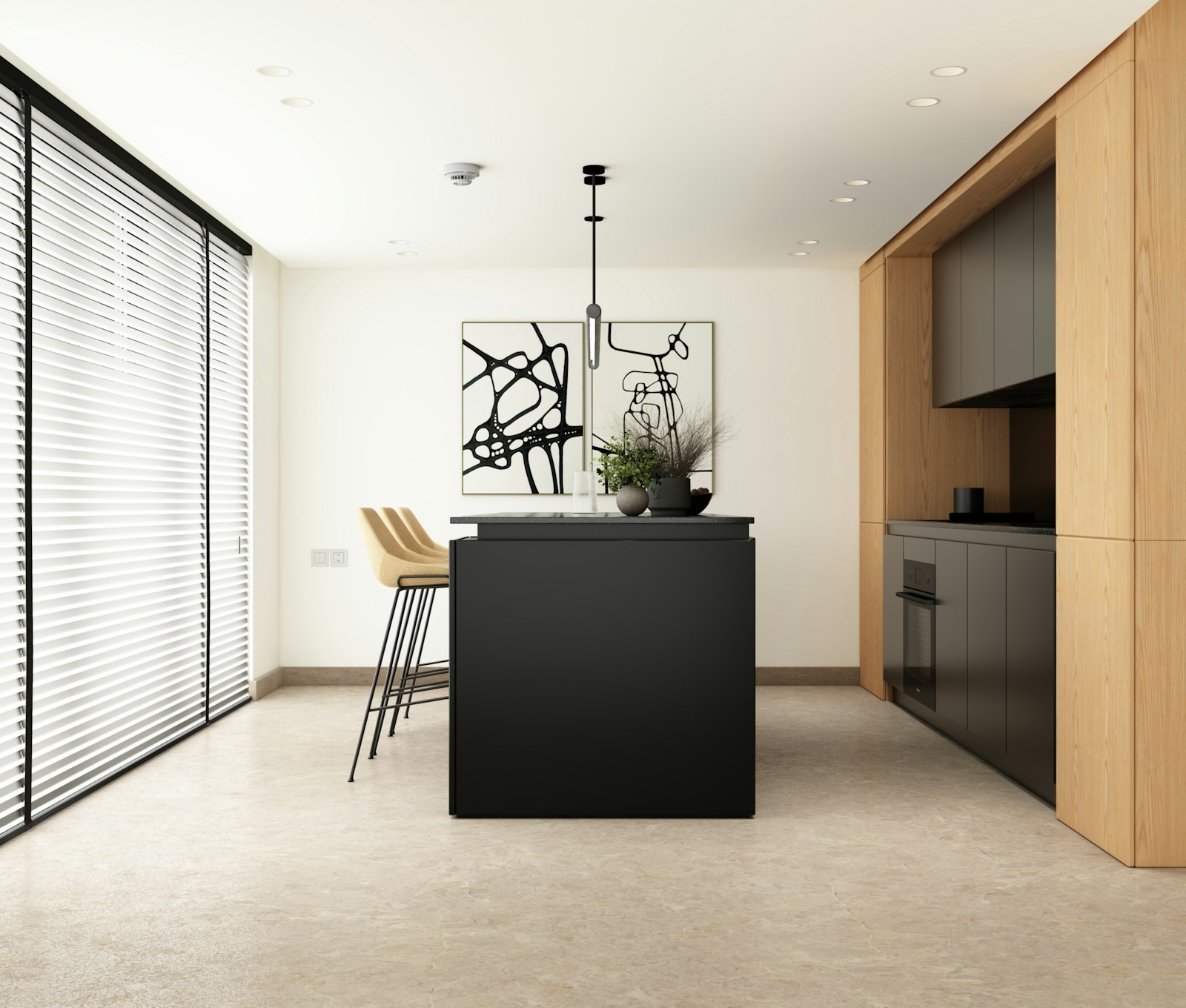
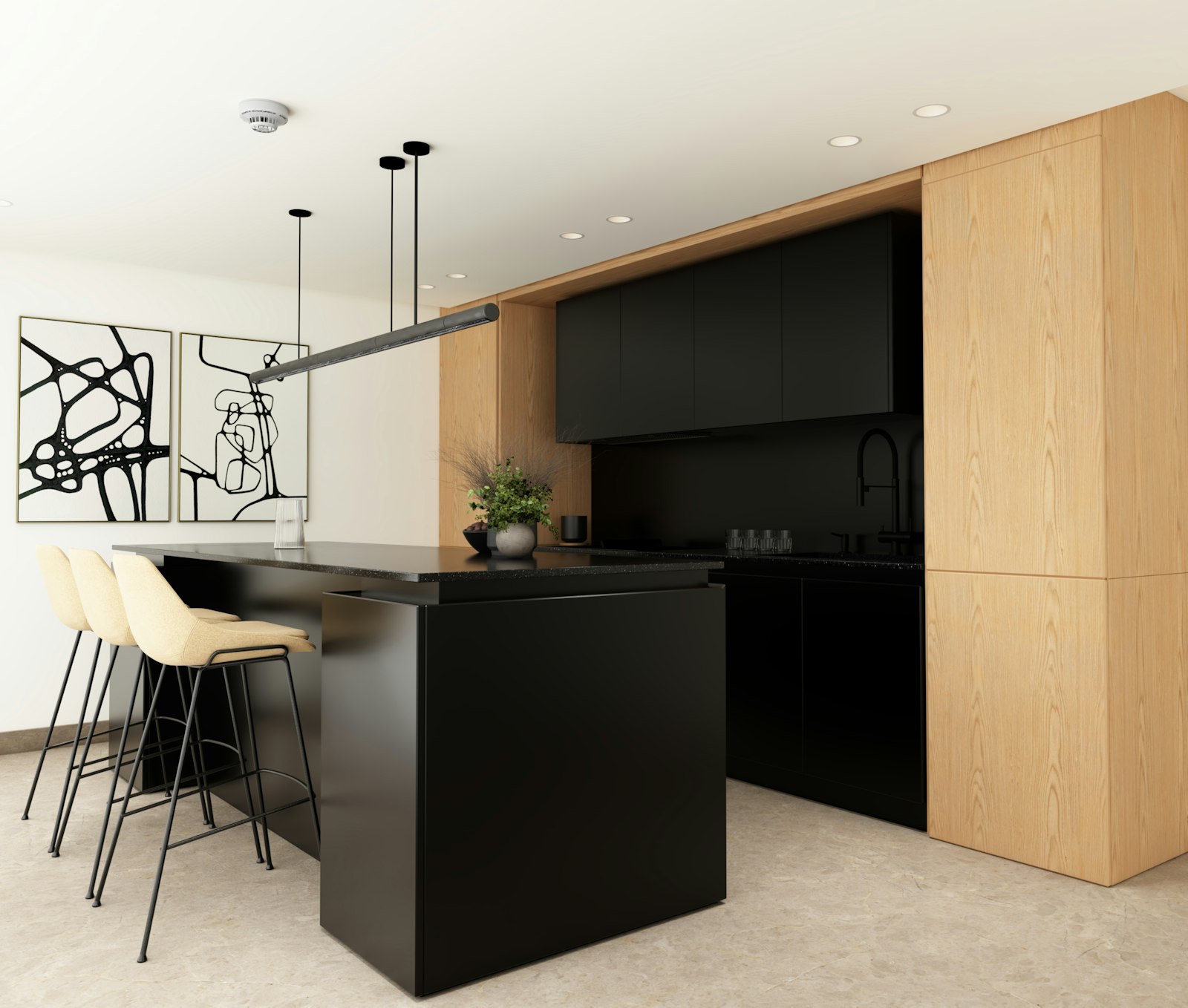
You lean back on the sofa after dinner, and the kitchen at the far end of the room looks like a wall of oak and black, with nothing sticking out. Then, at the next breakfast, you bump a drawer with your hip and it springs open. Both pictures are true, which is why a handleless kitchen needs planning rather than taste alone. Let us call them Anna and Martin. They are planning a new kitchen for their flat in Landstrasse, the third district, an open space with a view from the sofa straight onto the kitchen run. Anna wants it to look like a calm piece of furniture in the living space. Martin has reservations: fingerprints on matt fronts, a drawer that opens when he passes, and their two-year-old son with cupboards that open at a push. Both are right.
Contents
- What a handleless kitchen actually is
- The advantages in daily life
- The disadvantages worth discussing
- The everyday test: questions to ask yourself
- Mixed solutions: the best of both worlds
- Fronts and material: what goes with handleless
- Handleless and interior fittings
- Frequently asked questions
- What happens next
What a handleless kitchen actually is
Handleless does not mean the fronts open by themselves. It means only that no handle sits on the front. The job of the handle moves elsewhere. There are essentially four solutions.
Finger rail. A horizontal or vertical profile, usually aluminium, sits between the fronts or above them. You reach into the gap and pull the front out. This is the classic solution and the most robust.
Routed finger pull. The top edge of the front is bevelled or routed so that you can reach behind it. The grip is part of the front itself and looks especially pared back.
Mechanical push-to-open. A fitting pushes the front out a little when you tap it. You then pull it open by hand.
Electric opening assistance. A small motor opens the drawer at a light push. Closing takes a gentle nudge. Convenient, but dependent on power and more expensive.
| Solution | Operation | Look | Note |
|---|---|---|---|
| Finger rail | Reach and pull, very intuitive | visible gap, clear lines | slightly less internal height in drawers |
| Routed finger pull | Reach behind the edge | very pared back | edge is under more strain |
| Mechanical push-to-open | Tap, then pull | completely smooth fronts | unintended opening possible |
| Electric assistance | Light pressure is enough | completely smooth fronts | needs power, higher cost |
What do you get in return for that extra thought?
The advantages in daily life
The most obvious advantage is calm. A run without handles looks like a wall or a piece of furniture, not a work appliance. In an open-plan living kitchen, where you see the kitchen from the sofa, that is a strong argument. Why the kitchen has to be thought through differently in an open space is covered in the article on the open-plan living kitchen.
The practical gains are solid too:
- Sleeves and belt loops no longer catch on handles.
- No handle knocks your hip as you walk along the run.
- The fronts wipe clean in one stroke, with no cleaning around handles.
- With finger rails the grip point is always at the same height, however wide the front.
- You never have to ask which handle you will still like in ten years.
Handleless kitchens have grown into an architectural language of their own. More in the piece The kitchen as architecture.
A handle is a promise that the kitchen is an appliance. Without a handle it becomes a room.
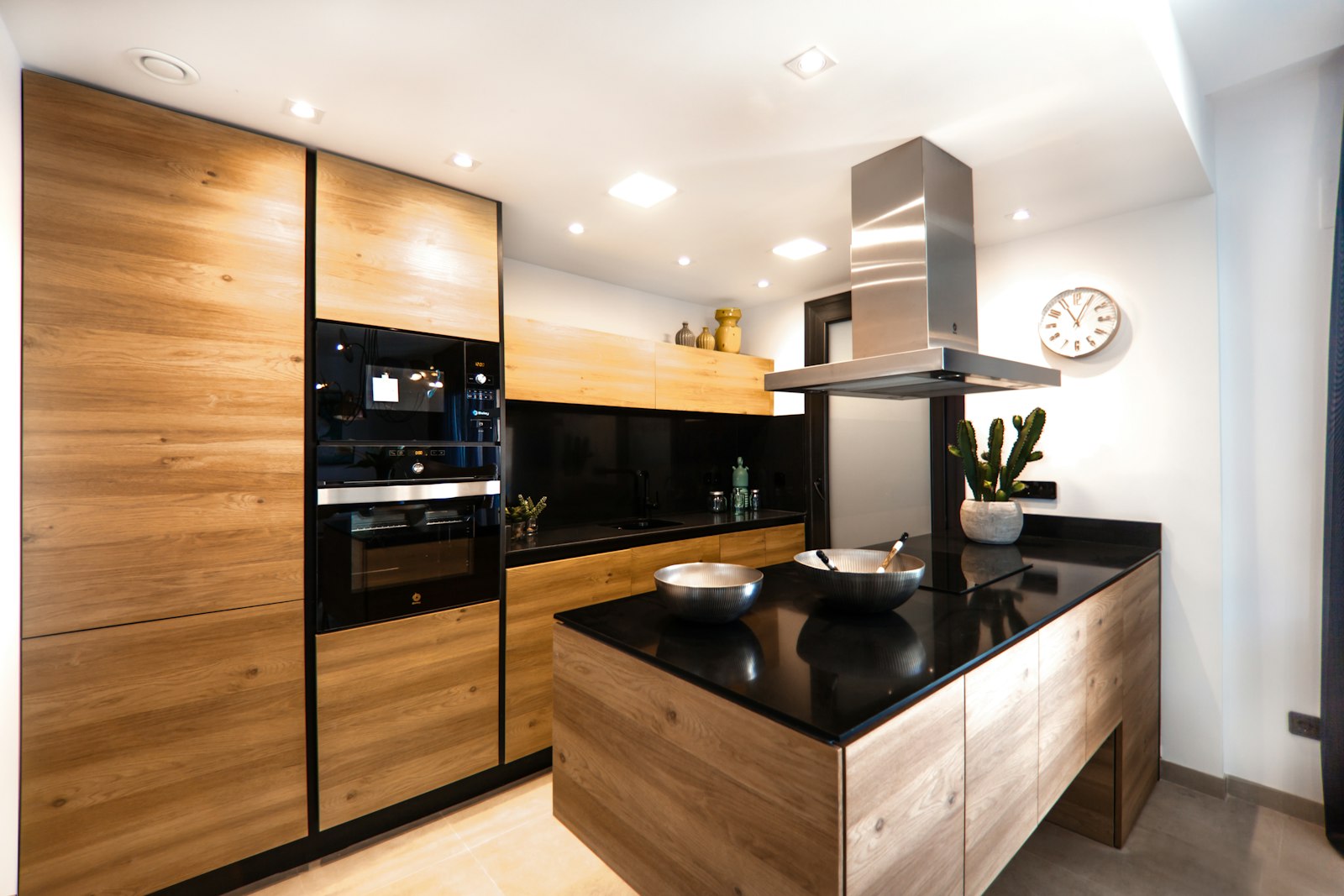
Picture the room at nine in the evening: the cooking island is a single dark volume, the oak fronts run unbroken to the ceiling, and the kitchen simply stops being a kitchen. Now for the honest part.
The disadvantages worth discussing
Martin's concerns are justified. Handleless kitchens have weaknesses, and it is better to know them beforehand.
Fingerprints. Whoever opens a push-to-open front touches it in the middle of the surface. On dark, matt lacquer, grease marks show clearly. With a finger rail you reach into the profile and hardly touch the front. If you choose push-to-open, favour surfaces that hide fingerprints, such as mid-tone colours, textured veneers or special matt coatings with anti-fingerprint properties.
Unintended opening. Mechanical push-to-open reacts to pressure, and pressure also comes from leaning on the run, a knee, or a child pushing against it. In base units at busy spots this can be annoying.
Children. For small children, push-to-open fronts are often a game. What opens with a tap is soon opened. Child locks for handleless fronts exist, but they are harder to retrofit than with handles.
Less internal space with finger rails. The profile takes a few centimetres of height from the drawers. With three drawers one above the other, this adds up.
Appliances with seals. Dishwashers and fridges have door seals that create resistance. A simple mechanical push-to-open reaches its limits here. Some appliances offer their own opening aids; otherwise a finger rail is the more reliable choice at these points. How to choose appliances for everyday practicality is in the article Kitchen appliances.
Cost. Finger rails and routed finger pulls are standard in many kitchen ranges. Electric opening systems cost extra and need power connections in the cabinets.
What doing nothing costs. Choosing the opening system last, from a catalogue photo, is the usual route to a kitchen you tolerate rather than enjoy: a fridge that will not open smoothly, fronts you wipe every day, a drawer you stop using. Fixing it later means replacing fronts, not turning a screw.
So how do you test whether it suits you?
The everyday test: questions to ask yourself
Whether a handleless kitchen suits you is decided not in the showroom but on an ordinary Tuesday evening. So with our clients we go through a series of questions before choosing a system.
- Who uses the kitchen? Small children, older people or people with limited hand strength usually cope better with finger rails than with push-to-open.
- How often is cooking done? If drawers are opened many times a day, reliability counts for more than the perfect surface.
- How clean should the fronts look? If fingerprints bother you, choose a finger rail or a forgiving surface.
- Where do people stand along the run? Where people lean or walk past, push-to-open fronts are less suitable.
- How much should the kitchen cost? Electric systems are convenient, but not strictly necessary.
- How important is the completely smooth surface? If it is very important, consider push-to-open above combined with a finger rail below.
Anna and Martin answered the questions together. The result was not a pure solution but a combination.
Mixed solutions: the best of both worlds
In practice we rarely plan a handleless kitchen with just one system. We combine solutions according to place and use.
Base units with finger rail. Doors here are opened most, often with wet or greasy hands. The rail is reliable and the fronts stay clean.
Wall units and flaps with push-to-open. Up high you do not bump them by accident, and the fronts stay completely smooth. The eye mostly sees the area above the worktop anyway.
Tall units with a vertical finger rail. A vertical profile between two tall units looks like a shadow gap and is very convenient for fridge and larder.
Island with routed finger pull. On an island seen from all sides, a pull integrated into the front looks calmest.
For Anna and Martin the base units got a finger rail in the colour of the fronts, so it hardly reads as a profile. The wall units open with push-to-open, dishwasher and fridge with a vertical rail. The bottom drawer beside the dishwasher, which their son can reach, got a simple child lock.
The most beautiful handleless kitchen is the one where, after three weeks, you no longer notice it is handleless.
Which fronts make that possible?
Fronts and material: what goes with handleless
Not every surface suits every handleless system equally. With push-to-open you touch the front in the middle of the surface; with finger rails you almost only touch the profile and the edge.
Matt lacquer looks especially calm in handleless kitchens, but shows fingerprints depending on colour and quality. High-quality matt lacquers and special super-matt surfaces with anti-fingerprint properties reduce this considerably. Real-wood veneer with an open grain is forgiving and pairs well with finger rails in a matching timber tone. Ceramic fronts are very robust, but their edges need particular attention with routed finger pulls. You will find the detailed comparison in the article Kitchen fronts compared, and an honest assessment of care in the piece Easy to clean? Which surfaces still look good after five years.
The joints matter too. A handleless kitchen looks calm only if the joints between the fronts are evenly narrow, typically a few millimetres. That takes precise installation and careful adjustment of the fittings. Our workshop, Tischlerkultur, has built in the Viennese carpentry tradition since 1935, and builds and installs handleless fronts even for unusual dimensions, for example in Altbau flats (pre-1945 Viennese apartments) with crooked walls. One contact at Richard Atelier looks after you from the first line on the plan to handover. When a joiner-made kitchen and when a branded kitchen suits is described in the article Kitchen from the joiner or branded kitchen.
Handleless and interior fittings
Whether with rail or push-to-open, a handleless kitchen plays to its strengths with drawers and pull-outs. A base unit with a hinged door and shelves contradicts the idea, because you still have to bend down and search. How to plan the inside of a kitchen so that everything is to hand is in the article on the interior of the kitchen.
Imagine reaching for the pan drawer on a Saturday morning: one light pull, it glides out fully, and everything lies in view. That is what the inside of a good handleless kitchen feels like.
The whole planning process, in which the decision for or against handles is only one building block, is in our guide to the fitted kitchen in Vienna. How we plan and build kitchens is shown on our page about fitted kitchens.
Frequently asked questions
Which is better: finger rail or push-to-open?
The finger rail is more reliable, more intuitive and keeps the fronts cleaner, because you reach into the profile. Push-to-open allows completely smooth surfaces, but can open unintentionally and shows more fingerprints. Often a combination is the right solution, such as finger rails below and push-to-open above, and we work that out with you.
Do you see a lot of fingerprints on handleless kitchens?
With push-to-open fronts you touch the surface directly, and on dark matt surfaces fingerprints can show. With a finger rail or routed finger pull you reach for the edge and hardly touch the front. Special matt surfaces with anti-fingerprint properties and mid-tone colours reduce the problem considerably.
Is a handleless kitchen suitable for families with children?
Yes, with the right combination. Finger rails are less tempting to children than push-to-open fronts that open at a tap. At child height, child locks are recommended and are best thought of in the planning from the start.
Does a handleless kitchen cost more?
Finger rails and routed finger pulls are available in many kitchen ranges without major extra cost, because the handles are omitted. Electric opening systems cost noticeably more and need power connections in the cabinets. The total depends more on fronts, worktop and appliances than on the opening system, and in the first call you get an honest estimate.
Does push-to-open also work on a dishwasher and fridge?
Mechanical push-to-open reaches its limits with appliances that have door seals, because the seal creates resistance. Some appliances offer their own opening aids that can be integrated into handleless kitchens. Otherwise a finger rail is the more reliable solution at these points.
Do you lose storage space with a finger rail?
A little, because the profile takes a few centimetres of height from the drawers. With several drawers one above the other, this adds up. In most kitchens the loss hardly matters in daily use if the interior is well planned.