Kitchen · 8 min read
Kitchen Fronts Compared: Matt Lacquer, Veneer, Solid Wood, Ceramic for Ten Good Years
Two samples lie on your dining table: a matt, warm grey in lacquer and a piece of oak, oiled, with a lively grain. One of you likes the grey because it is calm, the other likes the oak because it "looks like something". Layout, appliances and worktop are settled, and still you cannot decide, because the real question is not which looks better today. It is what this will look like in five years, with children, a dog and daily cooking. Take a couple in a detached house in Hietzing as an example; their answer, further down, may surprise you.
Contents
- Why the front matters more than the colour
- The materials at a glance
- Matt lacquer: calm, colourful, but vulnerable at the edges
- Real-wood veneer: warmth that ages with you
- Solid wood: honest, but with a life of its own
- Ceramic and ultra-compact surfaces: robust to the limit
- Combining instead of deciding
- How to choose front samples properly
- Frequently asked questions
- What happens next
Why the front matters more than the colour
Kitchen fronts are the surfaces you touch most often and see most often. They shape the character of the kitchen, and in open-plan living kitchens that of the whole room. At the same time they are exposed every day to water, grease, heat, knocks and hands.
It is therefore worth choosing fronts not only by first impression. Four questions are decisive: how does the material feel? How does it behave when damaged? How does it change over time? And how does it fit with the rest of the home?
The last question is often forgotten. A kitchen that thrills in the showroom can look alien in your own living space if it does not suit the floor, doors and furniture. How to coordinate materials across the whole home is described in our article on the material concept as a common thread.
What a hasty choice costs. A front you only half like is not a drama, but you meet it several times a day, for years. The chip at an edge you chose not to think about, the fingerprints you wipe every evening, the wood that moves because the wrong construction was used: these are the small, daily prices of a decision made in the showroom under spotlights.
The materials at a glance
The table below shows the most important front materials in direct comparison. Price level is relative and depends heavily on manufacturer, finish and dimensions. Which of them suits the way you cook?
| Material | Look and feel | Robustness in daily use | Repairability | Price level |
|---|---|---|---|---|
| Matt lacquer | calm, colourful, velvety | good, edges vulnerable to knocks | small damage with effort | mid to upper |
| Real-wood veneer | warm, lively, textured | good, depending on finish | often easy to touch up | upper |
| Solid wood | very natural, strong | good, moves with the climate | can be sanded down | upper to high |
| Ceramic | stone-like, cool, very smooth | very high, edges tricky | hardly repairable | high |
| Super-matt laminate | smooth, matt, warm | very good, low on fingerprints | limited | mid |
| Glass | glossy or satin | good, sensitive to impact | replace the front | upper |
Matt lacquer: calm, colourful, but vulnerable at the edges
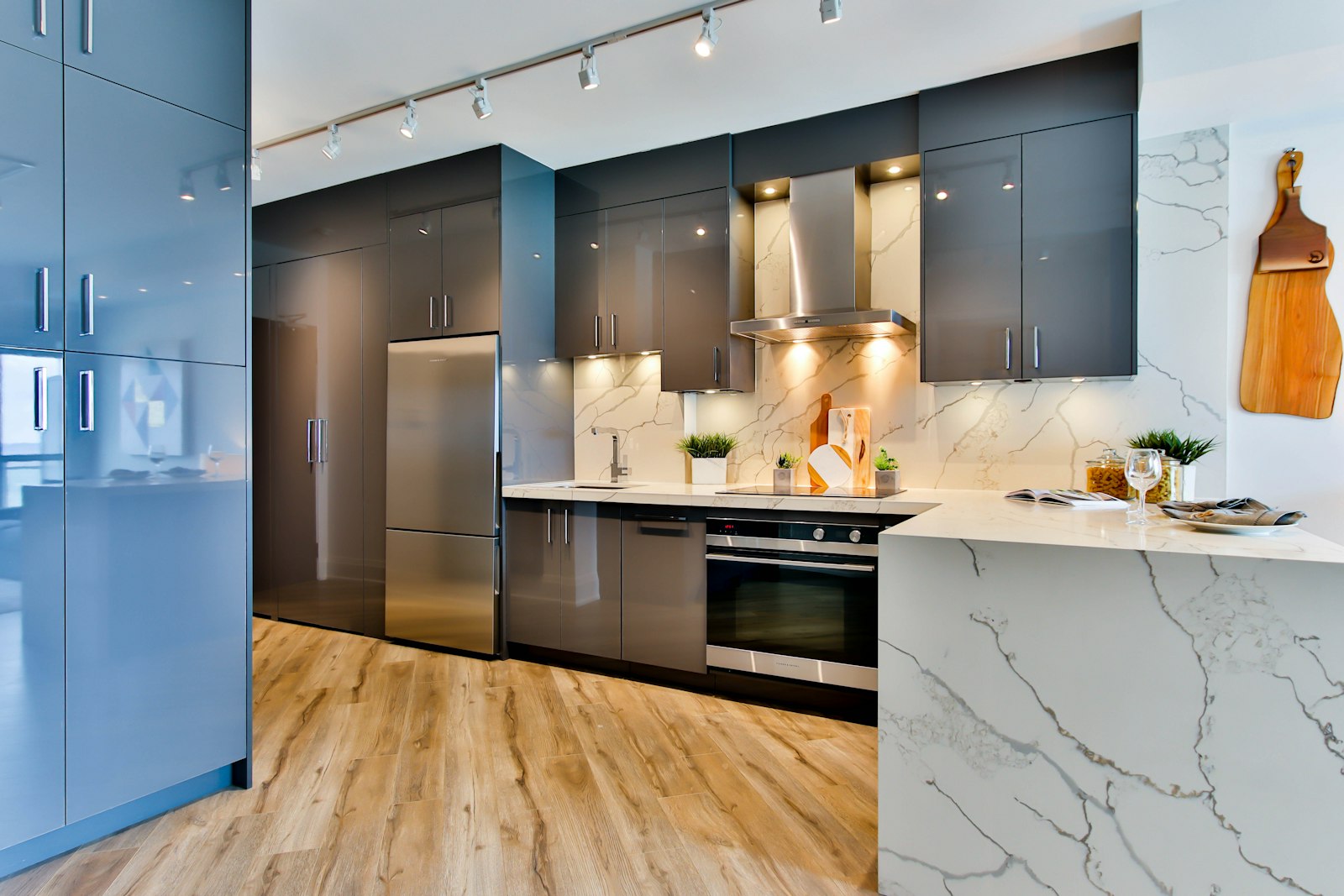
A lacquered front consists of a carrier board, usually MDF, that is sprayed in several coats and sanded between coats. The result is a homogeneous, jointless surface that is possible in almost any colour. In recent years matt lacquer has largely replaced high-gloss, because it looks calmer and reflects less.
The strength of lacquer is calm. A matt lacquered front steps back and lets worktop, light and room take effect. In open-plan living kitchens, where the kitchen is meant to disappear like a piece of furniture, that is a great advantage.
The weakness is the edges. A knock from a pot or a child's toy can cause a chip at the edge. Small damage can be repaired by specialists, but that is more costly than with wood. Dark, very matt lacquers also show fingerprints, especially on handleless fronts with push-to-open. How to allow for this in the planning is described in the article on the handleless kitchen. And is wood the calmer answer?
Lacquer forgives little, but it also asks little. Wood forgives a lot, and tells the story of every year.
Real-wood veneer: warmth that ages with you
Veneer is a thin layer of real wood applied to a stable carrier board. Many people regard veneer as the cheaper version of solid wood. For kitchen fronts, however, it is often the technically better solution, because the carrier board stays dimensionally stable while solid wood moves. The whole trade-off is explained in the article Veneer or solid wood: the honest answer of a joinery firm.
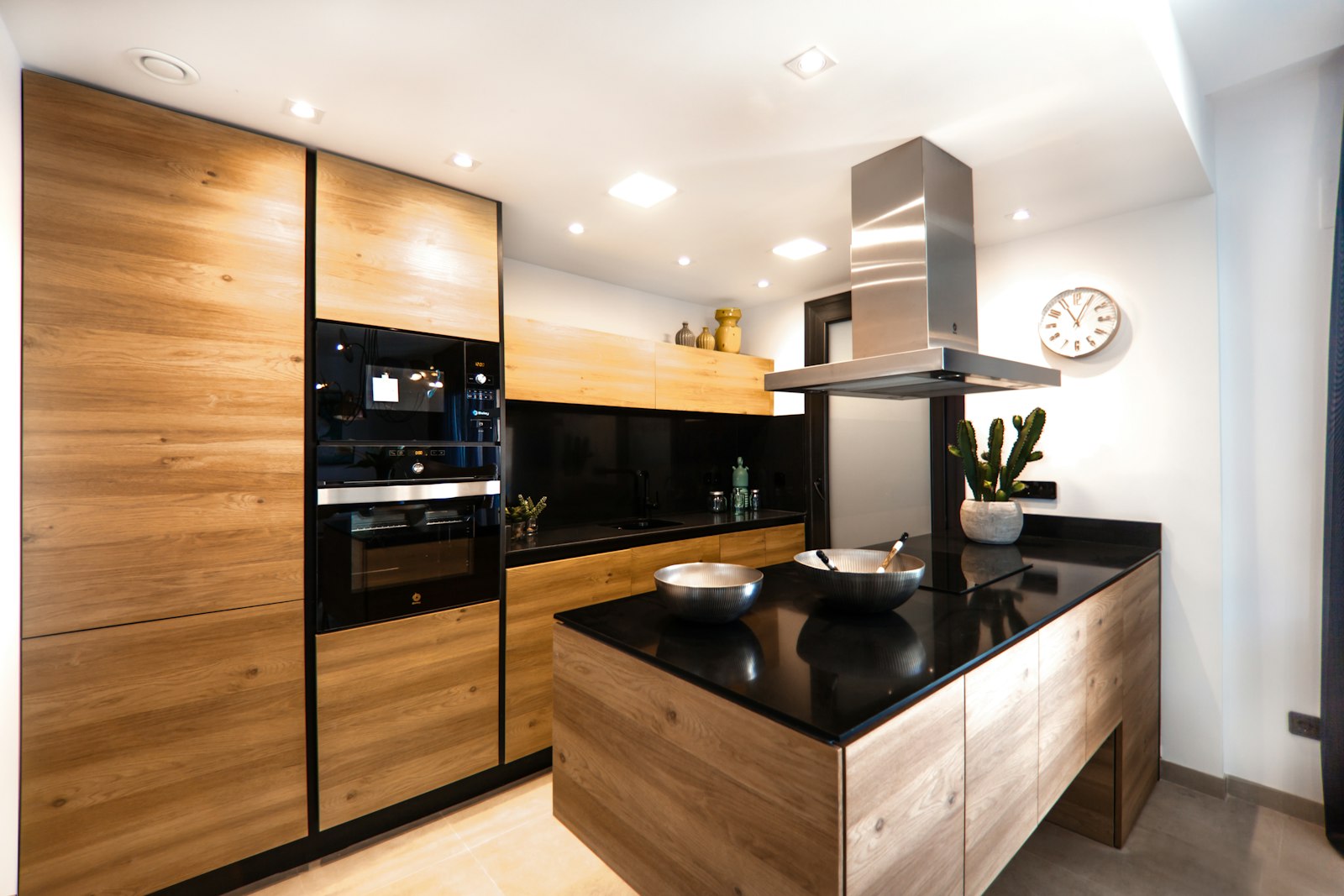
The particular charm of veneer lies in the pattern. If the veneer from one trunk is processed across several fronts in the right order, the grain carries on from one front to the next. A whole wall of tall units then looks as if made from a single piece. This careful selection is a strength of joinery work. In our workshop, Tischlerkultur, a Viennese joinery tradition since 1935, we therefore select veneers for larger surfaces specifically. Imagine the result: a whole wall of tall units in oak, the grain flowing unbroken from door to door, glowing in the morning light.
Wood changes under light. Oak usually becomes somewhat warmer and more golden over time, American walnut tends to lighten a little. This ageing is natural and wanted by most people. Anyone who wants the wood to stay as constant as possible should discuss that when choosing the finish. How different woods age is described in the piece on real wood in interior fit-out.
For the finish there are two routes. Oiled fronts feel natural and can be treated locally for small scratches, but need occasional care. Lacquered veneer fronts are less sensitive to stains, but feel less like wood. For kitchens we often recommend a matt lacquer with an open-pore look, which combines both advantages.
Solid wood: honest, but with a life of its own
Solid-wood fronts are made of wood throughout. This has a strong, honest character and the advantage that surfaces can be sanded down and renewed even after years.
But solid wood moves. It absorbs moisture and releases it again, swelling and shrinking with the seasons. In a kitchen with steam from cooking and dry heating air in winter, that is a real challenge. Large, smooth solid-wood fronts can warp. They are therefore usually built as frame-and-panel doors, in which a frame holds a panel that is allowed to move. That suits classic and country-style kitchens well, and minimal, modern designs less so.
In the modern kitchen we therefore use solid wood selectively: for finger rails, visible edges, open shelves, tabletops or a counter on the island. There the material shows its strengths without the movement of the wood being a nuisance.
Ceramic and ultra-compact surfaces: robust to the limit
Ceramic fronts consist of a thin ceramic or ultra-compact slab applied to a carrier board. They are very scratch-resistant, heat-resistant, insensitive to stains and colour-stable. Particularly appealing is the possibility of making fronts and worktop in the same material, so that the kitchen looks as if cut from one block.
The limits lie in weight and edges. Ceramic fronts are considerably heavier than lacquer or wood fronts, which calls for stable fittings. The edges are harder but more brittle, and a chip can hardly be repaired. The front then has to be replaced. What ultra-compact materials such as Cosentino Dekton can and cannot do is explained in the article Dekton explained. For the worktop we compare the options in the piece Worktop: Dekton, natural stone or quartz.
Combining instead of deciding
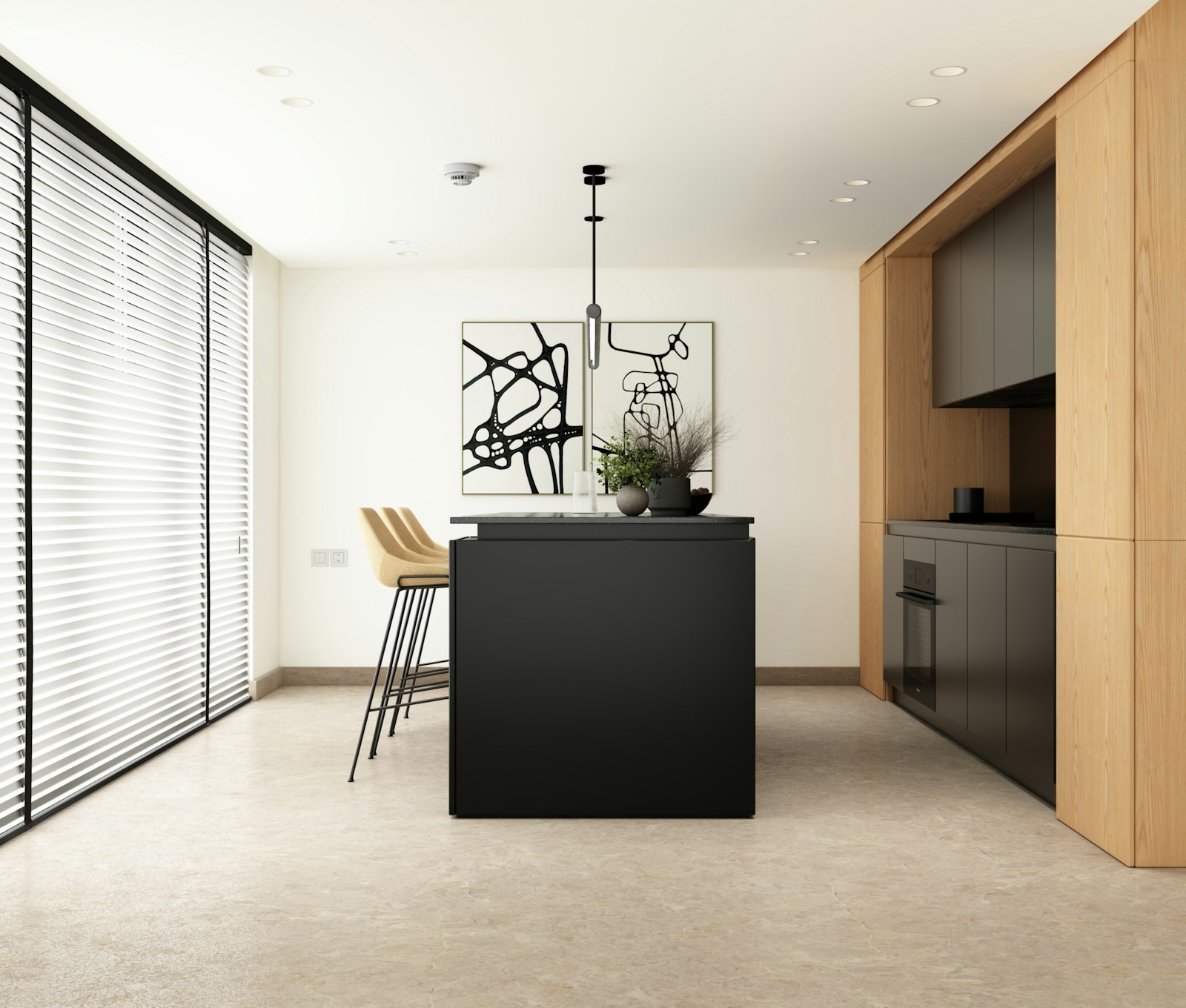
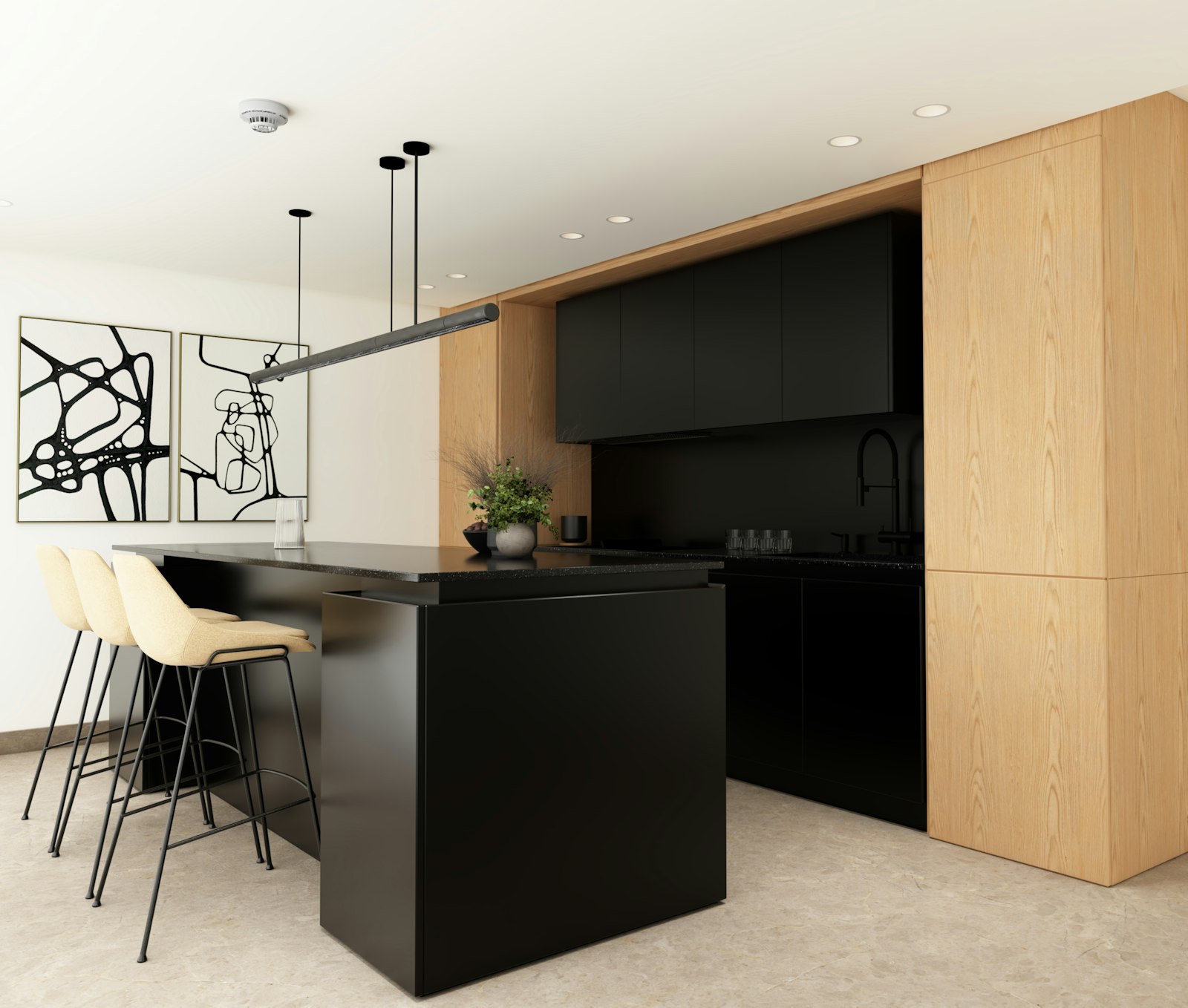
Back to the couple in Hietzing. The question "lacquer or oak" could in the end be answered with "both". The wall of tall units, visible from the living space and hardly exposed to knocks, was made in oak veneer with a continuous grain. The base units, which deal daily with pots, dog bowls and children's feet, got a matt lacquer in the warm grey. The island took up the grey, with the oak on its seating side. Picture the evening: the oak wall glowing warm behind the island, the grey calm beneath, and a kitchen that looks as if it has always belonged to the house.
This kind of combination is often the best solution. It distributes the materials by the strain they face and at the same time creates a clear design. Proven combinations include:
- tall units in wood, base units in lacquer
- run in lacquer, island in wood or ceramic
- fronts in lacquer, open shelves and edges in solid wood
- fronts and worktop in ceramic, tall units in veneer
What matters is that no more than two, at most three materials come together, otherwise the kitchen becomes restless.
How to choose front samples properly
Samples in the showroom under artificial light look different from those in your own kitchen in daylight. We therefore recommend choosing samples in several steps:
- Ask for large samples. A piece of at least about 30 by 30 centimetres shows colour and grain more realistically than a small tile.
- Look at them at home. In daylight in the morning, in the afternoon and in the evening under the planned artificial light.
- Combine with floor and worktop. Never judge the front alone, always in combination.
- Touch and test. Touch it with greasy fingers, wipe it with a damp cloth, watch how it behaves.
- Discuss ageing. How does the material change over five and ten years?
- Decide when everything fits together. Not under time pressure, but with enough distance.
Which surfaces really still look good after years we have summarised in the article Easy to care for? An honest assessment. And why durable materials are the more sustainable choice you can read in the piece Sustainable means long-lasting. The planning of a whole kitchen is described in our guide to the fitted kitchen in Vienna. How we make fronts and carry out kitchens is shown on our page about fitted kitchens.
Frequently asked questions
Which kitchen front is the easiest to care for?
In daily use, super-matt laminates and ceramic fronts are considered particularly easy to care for, because they are insensitive to stains and show hardly any fingerprints. Matt lacquer in mid-tone colours is also very straightforward. Real-wood veneer with a good lacquer finish needs hardly more care, while oiled surfaces need a little attention now and then.
Matt lacquer or veneer: which lasts longer?
With good workmanship both materials last many years. Veneer ages visibly and can often be touched up when scratched; lacquer stays visually the same, but is more vulnerable to knocks at the edges and harder to repair. Which ageing you prefer is often the real decision.
Are solid-wood fronts suitable for kitchens?
Only to a limited extent for flat, modern fronts, because solid wood moves with moisture and temperature and can warp. As a frame-and-panel front, or for finger rails, edges, shelves and counters, it is very suitable. For smooth, modern wooden fronts, real-wood veneer on a stable carrier board is usually the better choice.
What are the disadvantages of ceramic fronts?
Ceramic fronts are heavy, which calls for stable fittings, and their edges are brittle. A chip can hardly be repaired, and the front then has to be replaced. They are also usually at the upper end of the price range.
Does wood in the kitchen change over time?
Yes, wood changes colour under light. Oak usually becomes somewhat warmer and more golden, American walnut tends to lighten a little. This change is natural and even, as long as the fronts are not permanently covered in part.
Can you combine different front materials in one kitchen?
Yes, and that often makes sense. The approach that has proved its worth is to use robust materials where the strain is high and warmer materials where they are seen. There should not be more than two or three materials, though, so that the kitchen stays calm.