Light & Technology · 9 min read
Making Use of Daylight at Home: Windows, Mirrors, Colour and Orientation
It is eleven in the morning, and you switch on the hallway light because it has no window. Now picture the same hallway with a glass door at its end, a pale wall and a mirror catching the light from the next room, so that you walk through it without reaching for a switch.
Imagine a couple in Margareten, in a Gründerzeit building (a late-19th-century Viennese apartment house), first floor, all windows onto the courtyard. The neighbouring building stands eight metres opposite. In the living room a narrow strip of sun arrives in the morning, the kitchen lies behind it in half-darkness, and the hallway has no window at all. The two love the apartment, the ceiling height, the old parquet. But they ask: can you make a dark apartment brighter without moving?
Contents
- How daylight gets into a room
- Orientation determines the character
- Colour and surface: the strongest lever
- Freeing the windows: curtains, furniture, window sills
- Passing light on: glass in interior doors and walls
- Placing mirrors correctly
- Built-ins that carry light
- Sun protection and artificial light as complements
- Frequently asked questions
- What happens next
How daylight gets into a room
Daylight does not only enter a room as direct sun but above all as diffuse skylight and as light reflected from neighbouring facades, floors and trees. In inner courtyards, this reflected share is particularly important. A pale facade opposite can bring more light than an open but grey sky.
Within the room, light falls off quickly with distance from the window. As a rule of thumb, usable daylight reaches about one and a half to two times as deep into the room as the height of the top edge of the window above the floor. Beyond that it becomes noticeably darker.
For the Viennese Altbau this is good news. Tall windows with a high lintel let light deeper into the room than low windows in new buildings. The problem here is rarely the windows but what happens between the window and the depth of the room.
You cannot make a window bigger without building. But you can make sure its light reaches further.
The cost of living in the dark. A dim apartment is a daily tax on mood: lamps on at noon, colours that look grey, a morning that never quite starts. More lamps rarely fix it. The light is already there. It needs to travel further, and that begins with knowing where it comes from.
Orientation determines the character
Each compass direction delivers a different light. Anyone who understands this plans rooms, colours and uses accordingly.
| Direction | Character of light | Well suited to | Points to note |
|---|---|---|---|
| North | Even, cool, no direct sun | Workplace, studio, library | Quickly feels cool; warm colours compensate |
| East | Morning sun, clear and fresh | Bedroom, kitchen, breakfast spot | Rather shady from midday |
| South | Plenty of light, warm, changing through the day | Living room, dining area | Sun protection needed in summer |
| West | Afternoon and evening sun, warm | Living room, terrace, evening use | Summer overheating, glare from low sun |
In our example the windows face east onto the courtyard. In the morning some light comes in; from midday everything lies in shade. A simple but important decision follows: the dining spot moves to the window, where breakfast is eaten in the morning. The reading chair, used in the evening, goes into the depth of the room, where artificial light is needed anyway. Now what do colour and surface add?
Colour and surface: the strongest lever
Every surface throws part of the light back and swallows the rest. A white ceiling reflects most of it, a dark floor very little. In a room with light surfaces the light is passed on several times and so reaches the rear areas too. In a dark room it ends after the first surface.
Clear recommendations follow from this:
- The ceiling as light as possible. It is the most important reflecting surface for the light that enters through tall windows.
- Walls light, but not necessarily pure white. In north-facing rooms warm whites help; in south-facing rooms they may be cooler.
- Window reveals especially light. They direct light into the room before it meets a wall.
- Floors medium to light. A light floor throws light back up to the ceiling. The old oak parquet can stay if it has not been stained too dark.
- Matt rather than high gloss. Matt surfaces distribute light softly. High gloss creates reflections and glare, but not more brightness in the room.
Colour is not taboo, however. A strong shade on a wall that is not in the path of the light can give a room depth without making it darker. How to coordinate colours across the whole apartment is described in the article Colour concept for the whole apartment. Yet the best surfaces cannot help if something blocks the window.
Freeing the windows: curtains, furniture, window sills
Many apartments lose light not through windows that are too small but through everything in front of them. A curtain that covers a third of the glass even when open. A desk with a monitor directly in front of the window. Plants and decoration on the window sill.
A few simple rules help:
- Mount curtain rails wider and higher. The open curtain then lies beside the window on the wall, not in front of the glass. With tall Altbau windows this also looks more generous.
- Light fabrics for the day. A translucent linen curtain filters views from the neighbouring building without taking the light. More in the article Textiles: curtains, rugs and homeliness.
- Low furniture in front of windows. A sideboard below sill height does not interfere; a tall cabinet across the window does.
- Keep window sills clear. With box-type windows especially, the reveal is a valuable light director.
- Workplaces at the side of the window. That way the light falls on the desk, not into the screen.
Passing light on: glass in interior doors and walls
Where a room has no window of its own, it can receive light from next door. This is where the greatest potential lies in dark Altbau apartments.
Many Gründerzeit apartments originally had transom lights above the interior doors, glazed panels that let light into corridors and hallways. They were often closed up later. Reopening them is one of the most effective measures we know.
Where there were no transom lights, glass doors, interior windows or glass walls help. A glass sliding door between living room and kitchen lets the light through but separates noise and smells. How this works in design terms is described in the articles Semi-open instead of open and Sliding doors and glass systems. The role glass and metal can play in interior fit-out is shown in the article Glass and metal. Imagine standing in the hallway at noon, with light arriving through frosted glass from the kitchen and no lamp on.
For bathrooms and hallways, interior windows in satin or textured glass are suitable, letting light through but not views. For walls that must meet fire protection or sound insulation requirements, we first clarify with the relevant specialists which glass is permitted. If a wall is load-bearing, the structural engineer decides anyway.
The brightest hallway is often one that has no window of its own but three glass doors.
Placing mirrors correctly
Mirrors do not create light, but they distribute it. Placed correctly, they double a view from the window and bring light into a dark corner. Placed wrongly, they dazzle or simply reflect the opposite wall.
The most important rule: a mirror works best at the side of the window, not directly opposite. At the side it catches the incoming light and throws it into the depth of the room. Directly opposite, it mainly reflects the window back, which can dazzle when the sun is low.
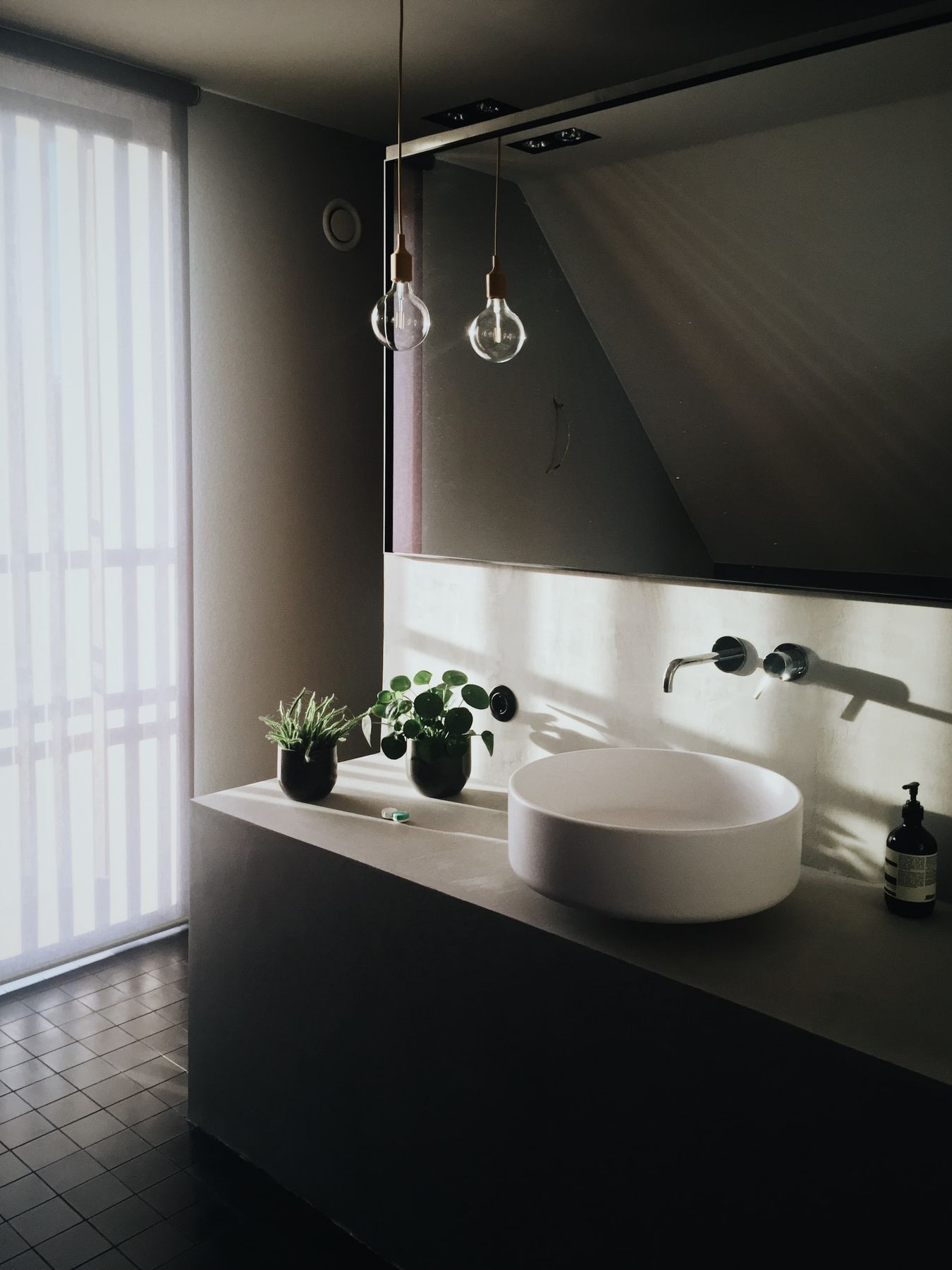
In the hallway, a large mirror opposite a glass door can carry on the light from the next room. In the bathroom, a mirrored cabinet front strengthens the light from the window or from the mirror lighting. How small rooms look larger as a result is described in the article Making a small bathroom feel large. And furniture, too, can carry light.
Built-ins that carry light
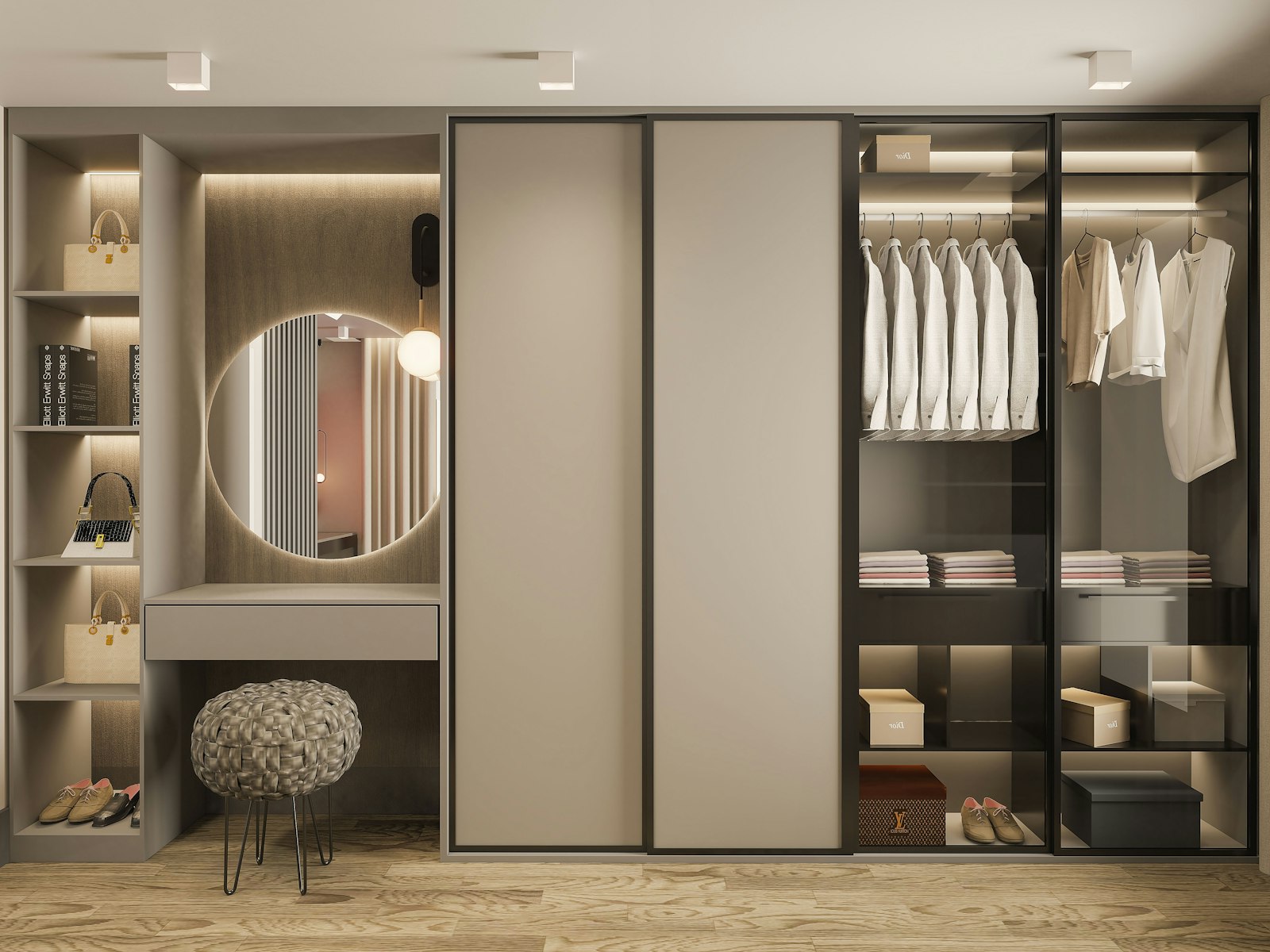
Furniture and built-ins influence daylight more than one might think. A dark wardrobe wall on the window side swallows light; a light one passes it on. Open shelves let light through, closed ones block it.
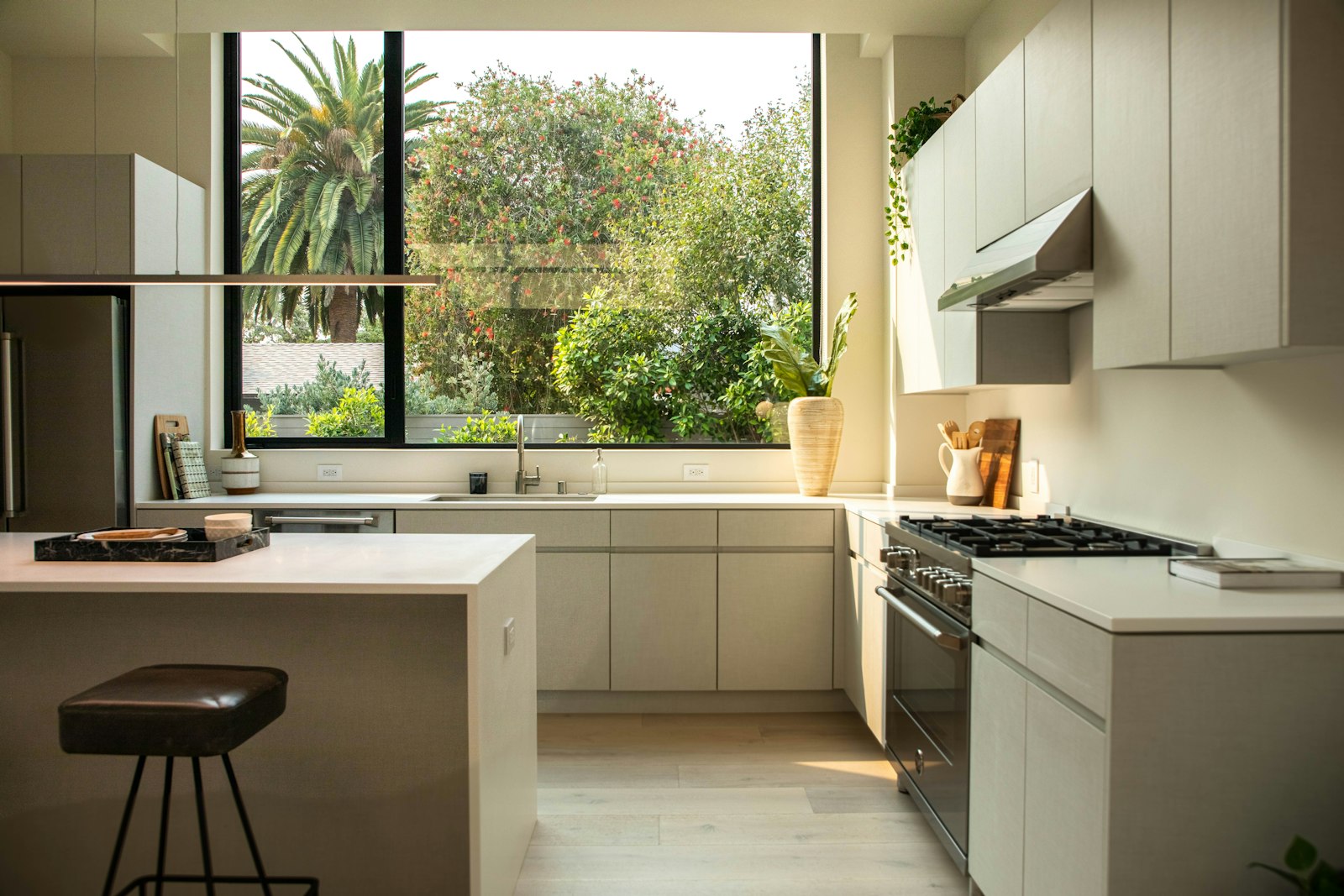
In the kitchen of our example couple we work with light, matt fronts and a light worktop. The wall cabinets are replaced by an open shelf with a light strip beneath it. The wall to the living room receives a glazed transom light above the new door. The kitchen is not bright like a south-facing room, but you can make coffee in the morning without switching on a light. How a small kitchen can manage with little floor area is described in the article Thinking big in a small kitchen.
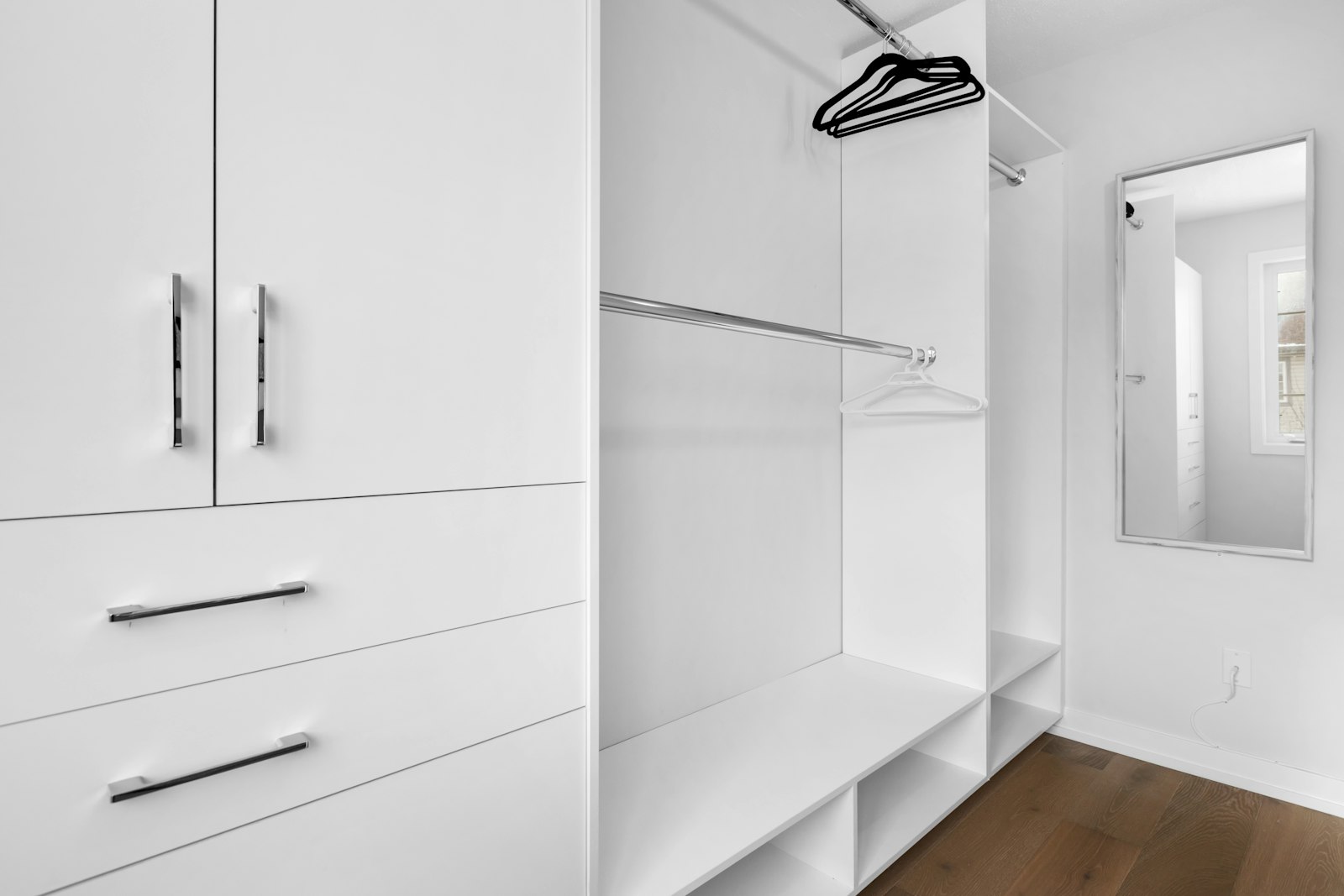
In the hallway a built-in wardrobe has light fronts and a mirrored door opposite the new glass door to the living room. Our own joinery workshop Tischlerkultur, in the Viennese tradition since 1935, makes the fronts so that their colour and surface echo the walls. More on the hallway in the article Arriving: the entrance hall. More light also brings heat, so what about the summer?
Sun protection and artificial light as complements
In south- and west-facing rooms, more daylight also means more heat. Good sun protection therefore belongs in every daylight plan. External systems keep heat out most effectively. In an Altbau they are not possible everywhere, however, because the facade and townscape may be protected. What is permitted in an individual case we clarify with the property management company and the authority.
Where daylight ends, artificial light begins. In a dark apartment it is worth supplementing the rear areas of the room with indirect, warm light on walls and ceiling. That way the room feels open in the afternoon too, and the transition from day to evening becomes softer. How this is planned in detail is explained in the article Lighting design for the home.
In a renovation we see daylight, colour, built-ins and artificial light as one task. This is one reason why we recommend an overall concept for Altbau apartments; see Renovating an Altbau apartment in Vienna. One person at Richard Atelier keeps daylight, colour, built-ins and artificial light together.
Frequently asked questions
How can you make a dark apartment brighter?
Most effective are light, matt surfaces on ceiling and walls, unobstructed windows and glass in interior doors or walls. Mirrors at the side of the window distribute the light into the depth of the room. Indirect artificial light in the rear areas helps as a complement. Photos of your rooms are enough for a first idea.
Which wall colour makes a room brighter?
Light colours with a high degree of reflection, above all on the ceiling. In north-facing rooms warm whites and creams feel friendlier; in south-facing rooms they may be cooler. Matt surfaces distribute light more evenly than glossy ones.
Where should you hang a mirror to get more light?
At the side of the window, so that it directs the incoming light into the room. Directly opposite the window it mainly reflects the window itself and can dazzle. In the hallway, a mirror opposite a glass door works especially well.
Are interior windows or transom lights allowed in an Altbau?
Often yes, but it depends on the wall. With load-bearing walls the structural engineer decides; where fire or sound insulation requirements apply, the glass must be chosen accordingly. In condominium ownership, the consent of the co-owners may also be required. We clarify it in advance with the right specialists.
Which orientation is best for which room?
East suits bedrooms and kitchens because of the morning sun, south and west suit living rooms used in the afternoon and evening. North-facing rooms offer even, glare-free light for workplaces. In existing buildings, use is best adapted to the light that is there.
Do light floors really help?
Yes, a light floor throws light back up to the ceiling, which spreads it further into the room. The effect is smaller than with ceiling and walls, but noticeable. A dark floor can be partly offset with light rugs.