Materials · 8 min read
Micro-Cement in the Bathroom: Jointless Trowelled Finishes and Their Limits
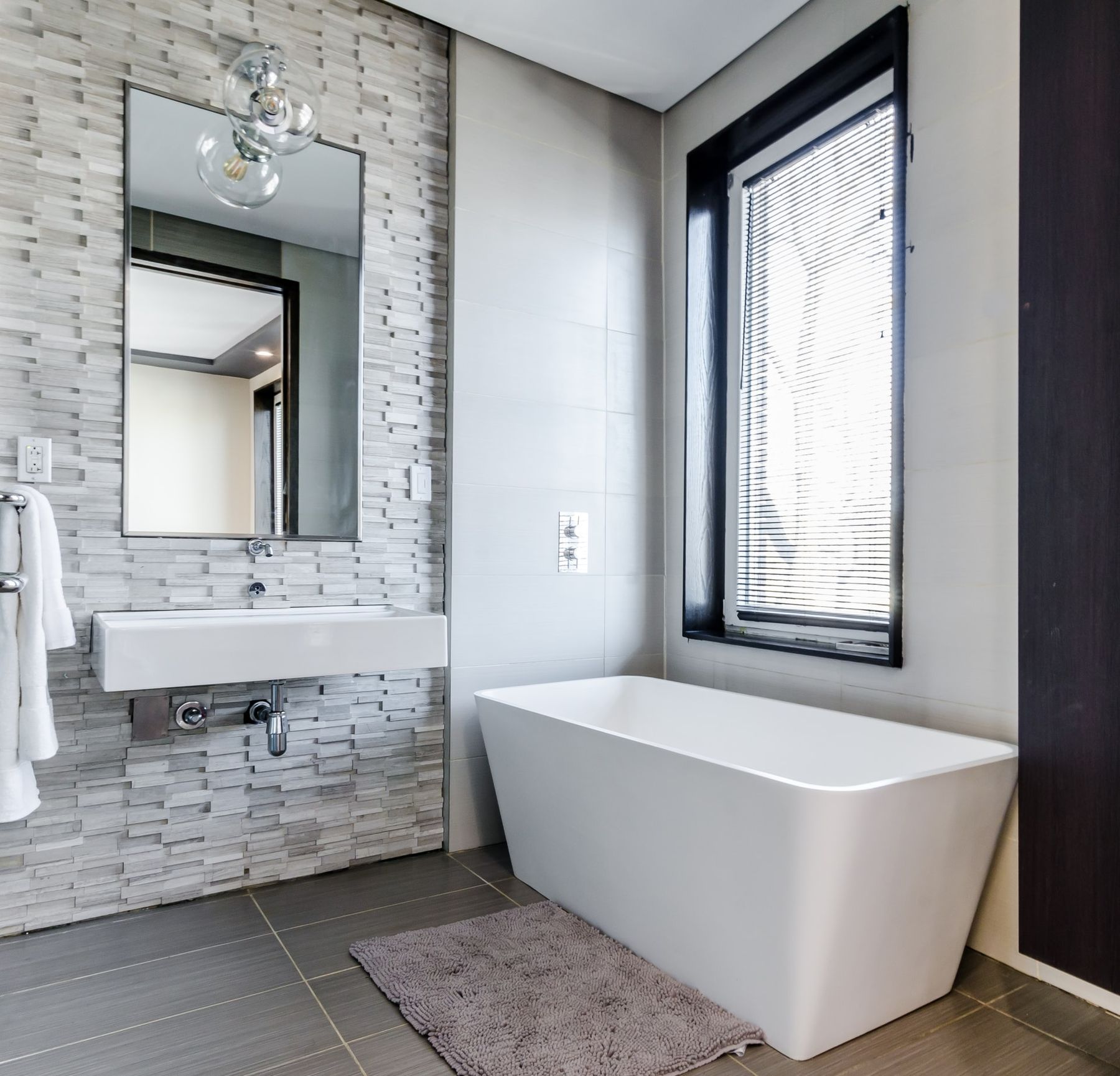
You step out of the shower and your bare foot meets a floor with no joint to catch it, and the wall beside you looks as if it had been poured from one soft, sandy stone. That is what a small hotel in Lisbon left in the memory of a couple at their kitchen table in Vienna's second district, scrolling through holiday photos. "That," she says, "is what we want too." Let us call the two Miriam and Stefan. Their bathroom measures six square metres, with tiles from the nineties and a bathtub nobody has used for years. The question they bring is: can this be done with micro-cement, and will it last?
Contents
What is micro-cement?
Micro-cement is a coating based on cement, fine mineral aggregates and polymer additives that provide adhesion and elasticity. It is applied in several thin coats with a trowel or spatula, sanded in between and finally protected with a sealer. The total layer thickness is usually only a few millimetres.
The result is a jointless surface with a lively, slightly cloudy texture. Every surface is unique, because the craftsman's trowel work remains visible. That is the appeal, and it is also the reason why no sample in a showroom looks exactly like the finished wall.
Micro-cement belongs to a larger family of jointless surfaces. These include traditional lime plasters such as tadelakt, which comes from Morocco and is compacted with soap, or Venetian plaster techniques. There are also poured floors based on synthetic resin. All have their own properties, and not every product sold as micro-cement is built up in the same way.
Micro-cement is less a product than a craft. The material is only as good as the hands that apply it.
What a hasty finish costs. A jointless surface is unforgiving. Applied over a moving substrate or without proper waterproofing, it shows hairline cracks within months, and then it is no longer a quick fix but a second renovation. The opposite error costs too: living for years with grout lines you scrub every week because nobody checked whether something calmer was possible. So why do people want it so much?
Why micro-cement is so popular in the bathroom
The reasons for wanting a jointless bathroom are easy to understand. Joints are the places where dirt, limescale and sometimes mould settle. A surface without joints looks calmer and larger, especially in small bathrooms.
- Calm look: Without a grid of joints, walls and floors look as if cast from one piece. That makes small rooms seem more generous.
- Low build-up height: Because the layer is only a few millimetres thick, micro-cement can in some cases be applied to existing, firm substrates. That saves demolition work.
- Flowing transitions: Wall, floor, washbasin recess and shower can be executed in one material.
- Warm effect: Mineral surfaces in sand, grey or earth tones feel softer than smooth, glossy tiles.
How to make a small bathroom look larger through such decisions is described in the article making a small bathroom look big. Every promise has its price, though: where does the material reach its limits?
The limits: what micro-cement cannot do
With micro-cement there are many enthusiastic and some disappointed experiences. The difference almost always lies in the same points. Anyone who knows them can decide better.
The substrate determines everything
Micro-cement is very thin. It follows the substrate, including its movements. If something moves underneath, such as a lightweight partition, a timber-beam ceiling in an Altbau (the pre-1945 Viennese apartment building) or a cracked screed, this can show up as a fine hairline crack on the surface. Movement joints in the substrate must be carried through in the coating, otherwise it cracks there.
That is why the substrate inspection is the most important step. Is the substrate firm, dry and load-bearing? Are there cracks, hollow spots, loose tiles? How does the ceiling behave? In the Viennese Altbau with timber-beam ceilings we are particularly cautious and, where necessary, clarify with the structural engineer whether the floor is stiff enough.
Over tiles: possible, but not automatic
Many hope to simply apply micro-cement over the old tiles. With firm, intact tiles this is possible in principle, with a bonding primer and often with reinforcement. Without a suitable levelling layer, the tile joints can show through later. Loose tiles or ones that sound hollow have to be removed anyway.
Waterproofing is a layer of its own
The sealer protects the surface from stains and water, but it is not a structural waterproofing. In the shower area and other places that are regularly wet, a professional waterproofing is needed underneath, as specified by the respective system and as required by the applicable rules for wet rooms. Anyone who skips this risks moisture damage that is only noticed when it is too late.
Application and drying time
Each layer must dry before the next follows. Added to this are sanding passes and the sealer, which in turn has to cure. A micro-cement bathroom therefore needs several days of pure coating time, depending on system, temperature and humidity. The quality depends strongly on how experienced the applicator is. Many system manufacturers train their applicators specifically.
For the schedule of a bathroom renovation this means: the coating is a separate phase in which other trades pause in the room. Only when the sealer has cured are fittings, washbasin and glass installed. Anyone who plans for this from the start avoids pressure on the applicator, which would otherwise show in the surface. What a realistic sequence looks like is described in the article how long does a bathroom renovation take. And the most demanding place of all is the one you stand in every morning: the shower.
Micro-cement in the shower
The shower is the most demanding place for micro-cement. It is wet every day, exposed to soap, shampoo and hard water, and must be slip-resistant.
It is possible, but needs several prerequisites:
- Professional waterproofing in the substrate, including sealing tapes at corners, pipe penetrations and the drain.
- A properly formed fall towards the drain, already laid in the screed. How this works with a level-access shower is described in the article planning a level-access shower.
- A slip-resistant sealer on the floor, suited to wet areas walked on barefoot.
- Good ventilation, so that moisture dries quickly. Background on this can be found under ventilation in the bathroom.
- Regular care of the sealer, especially on the floor.
For Miriam and Stefan we decide on a combination: micro-cement on the walls and on the floor outside the shower, and in the shower itself large-format ceramic in a very similar tone. The surface still looks low in joints, and the most heavily used area gets a material that is very robust there. More on this alternative under large-format ceramic in the bathroom. Imagine the result: a warm sand wall, a calm floor, and your bare feet on a surface that was chosen for wet days. Beyond the bathroom, micro-cement has more to offer.
Micro-cement in the living space
Outside the bathroom, micro-cement is used for floors, stairs, walls and furniture surfaces. In the living space the load from water is lower, but mechanical loads are added: chair legs, sand on shoe soles, heavy furniture.
The sealer protects but is not invulnerable. On a floor with a lot of use, scratches in the sealer eventually become visible. Felt glides under chairs and a doormat at the entrance help a great deal. With underfloor heating the system must be approved for it, and the screed should be heated up before coating in line with the specifications, so that it does not move later. More on surface heating is under heating and cooling through surfaces.
We do not recommend micro-cement for kitchen worktops. Heat, knives, acids and constant use are too much there for a thin coating. We describe more robust alternatives in the article Dekton explained. How does it compare with the other jointless options?
Jointless surfaces compared
| Surface | Joints | Build-up height | Robustness | Care | Typical use |
|---|---|---|---|---|---|
| Micro-cement | none | very low | medium, depending on sealer | renew sealer | bathroom, walls, floors |
| Lime plaster, e.g. tadelakt | none | low | medium | regular soap care | walls, shower niches |
| Terrazzo | few | high to low, depending on type | high | clean without acids | floors, washbasins |
| Large-format ceramic | very few | low to medium | very high | simple | bathroom, shower, floors |
| Dekton | very few | low | very high | simple | walls, washbasins, kitchen |
You will find a closer look at terrazzo under terrazzo: the comeback of a Viennese classic. How the individual surfaces age in daily use is compared in the article easy to care for? Which surfaces last. And once you have chosen, how do you keep it beautiful?
Care and longevity
A well-applied micro-cement can stay beautiful for many years if treated properly. Care is not complicated, but it differs from tiles.
- Mild cleaners: pH-neutral, without abrasives, without aggressive limescale removers.
- Prevent limescale: after showering, squeegee or wipe walls and floor dry briefly.
- Refresh the sealer: Depending on use and system, the sealer is renewed after a few years, in the shower floor sooner than on the wall.
- Fix small damage early: A damaged sealer lets water and dirt in. Repaired in good time, the surface stays intact.
A jointless bathroom demands no effort, but attention. Anyone who knows this will not be disappointed.
A question we are often asked: is micro-cement cheaper than tiles? Mostly not. The material share is small, but the labour of several coats, sanding passes and drying times is high. Costs depend heavily on area, substrate and system. Our guide to bathroom renovation in Vienna gives an orientation for the whole bathroom. In our own workshop and with trusted trades, one contact person at Richard Atelier coordinates substrate, waterproofing and finish from the first sketch to the handover, because a surface like this only works when the trades hand over to each other cleanly.
Frequently asked questions
What is micro-cement?
Micro-cement is a thin, mineral cement-based coating with polymer additives. It is applied by hand in several layers, sanded and sealed. The result is a jointless surface with a lively, slightly cloudy look.
Is micro-cement waterproof in the shower?
The sealer protects the surface, but as a rule does not replace waterproofing. In the shower area a professional waterproofing is needed underneath, following the system's specifications and the applicable rules for wet rooms. A correct fall and a slip-resistant sealer are also important. We check all of it with you before anything is ordered.
Can micro-cement be applied over old tiles?
With firm, intact tiles this is possible in principle, with a bonding primer and often reinforcement. Without a suitable levelling layer the joints can show through later. Loose tiles or ones that sound hollow must be removed beforehand. A photo of your tiles is a good start.
Why does micro-cement crack?
Mostly because the substrate moves, for example with lightweight partitions, timber ceilings or screed that has not been heated sufficiently. Movement joints that are bridged over also lead to cracks. Careful inspection and preparation of the substrate reduces this risk markedly.
How long does micro-cement last in the bathroom?
With good application and care, many years. Depending on use, the sealer should be refreshed after a few years, in the shower floor sooner. Small damage should be repaired promptly.
Is micro-cement cheaper than tiles?
In most cases not, because the labour of several coats and drying times is high. Costs depend on area, substrate and system. A saving sometimes arises when old tiles do not have to be demolished.