Process, Costs & Planning · 9 min read
What Does a Bathroom Renovation Cost in Vienna? Items, Cost Drivers and Savings Traps
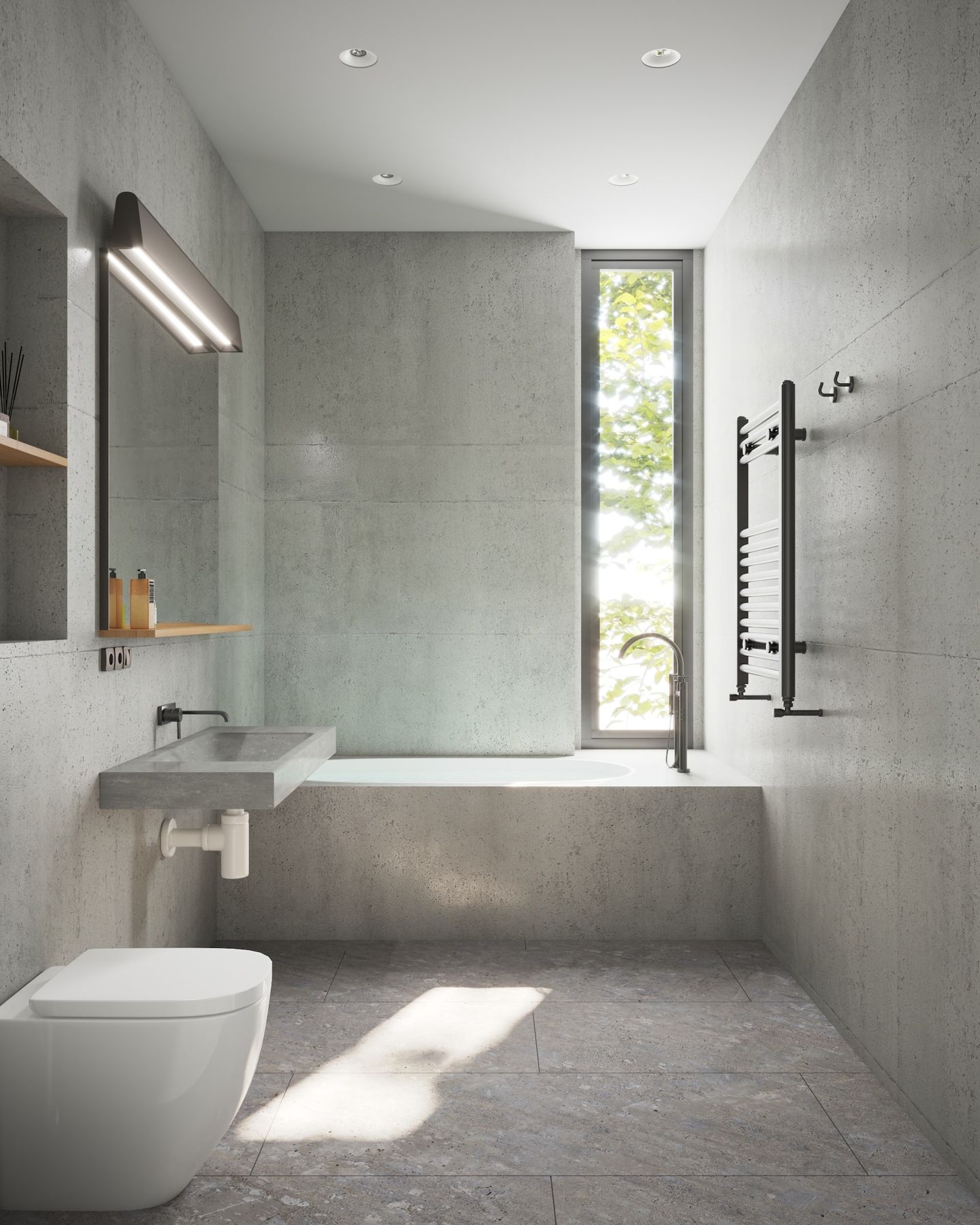
It is 6:40 in the morning and you wait in the corridor, politely, because your partner is still in the bathroom. Six square metres, a bath with a shower curtain, a washbasin from the eighties, tiles that were once beige. You would love a large level-access shower, a vanity unit with two basins and, at last, storage. And before you invite anyone to look, you want to know what to expect. Now imagine the same hour after the renovation: two people at two basins, the shower open and bright, and nobody waiting.
As an example, take a couple in the Landstraße district, in a Gründerzeit building (late nineteenth-century Viennese apartment block), third floor. This article explains the cost of a bathroom renovation in Vienna so that you can understand quotes and spot the traps.
Contents
- What does a bathroom renovation cost in Vienna? The cost drivers
- The items of a bathroom renovation at a glance
- What determines the price
- The Viennese Altbau as a cost factor
- Savings traps: where saving gets expensive
- Where saving makes sense
- Duration and sequence as a cost factor
- Frequently asked questions
- What happens next
What does a bathroom renovation cost in Vienna? The cost drivers
A bathroom renovation is the conversion of an existing bathroom in which surfaces, sanitaryware and usually the pipework are renewed. In a complete renovation, everything is stripped back to the bare wall and bare floor, the installation is re-routed, waterproofed and refitted.
What it costs depends mainly on size, the condition of the pipework, the choice of materials and the specification. High-quality complete bathrooms with large-format ceramic, a level-access shower, a bespoke vanity unit and good lighting involve considerably more work than a basic renovation. A reliable estimate comes in the first consultation. A small bathroom can turn out more expensive than a large one if the pipework is complicated or the floor has to be lowered for a level-access shower.
For the couple in Landstraße, this means: the size of their bathroom is not the problem. What will matter is where the riser is, what condition the old pipes are in, and whether there is enough build-up height under the floor for the shower fall. How a bathroom renovation runs from start to finish is shown in the guide to bathroom renovation in Vienna. But what exactly are you paying for?
The items of a bathroom renovation at a glance
A complete quote for a bathroom renovation should contain these items. If one is missing, it is not missing from the project, only from the paper.
- Planning and coordination: survey, design, tiling plan, detailed planning, coordination of the trades.
- Demolition and disposal: tiles, screed, sanitaryware, protection of the rest of the flat, removal.
- Plumbing installation: new water and waste pipes, pre-wall installation, connection to the riser.
- Electrical installation: cabling for lighting, mirror, ventilation, and where applicable underfloor heating or a towel warmer.
- Screed and waterproofing: fall for the shower, bonded waterproofing beneath the tiles, drying time.
- Tile or slab work: laying on floor and wall, cuts, edges, grout.
- Sanitaryware and taps: WC, washbasin, shower or bath, taps, linear drain.
- Vanity unit and furniture: base unit, mirror cabinet, niches, shelves, ideally bespoke.
- Glass: shower screen or walk-in glass, made to measure.
- Light and ventilation: mirror light, general light, extractor fan with sufficient output.
- Painting and final cleaning: ceiling, remaining surfaces, transitions to the corridor.
This list also shows why the price of a beautiful vanity unit makes up only a small part of the bill. The bulk of the cost disappears behind the tiles, and that is exactly where it should be well invested.
How to read a quote for the bathroom
With every quote, check whether all items on the list are included and how precisely they are described. A sentence such as "tiling as per survey" says little. Better is a description with area, format, laying pattern and edge treatment. Equally important: are waterproofing and fall separate line items? Who is responsible for disposal? Are sanitaryware and taps included, or are you supplying them? Only when these questions are answered can two quotes be sensibly compared.
A bathroom gets paid for twice if you save, the first time, on the part you cannot see.
What doing nothing costs. Putting off the renovation seems the cheaper choice, until you count what the old bathroom takes every day: the waiting at 6:40, the patched joints, the slow leak nobody has found yet. Old pipes and tired waterproofing are cheap to ignore and expensive to meet unprepared. Knowing the items now lets you plan the work at your pace, not in an emergency. What decides the total?
What determines the price
Four factors explain most of the differences between two bathroom renovations.
| Factor | Cheaper if | More involved if |
|---|---|---|
| Pipework | connections stay where they are | WC or shower move, riser is far away |
| Floor | sufficient build-up height available | level-access shower requires lowering or a special solution |
| Tiles | standard format, few cuts | large format, mitres, niches, natural-stone look with a grout pattern |
| Specification | series sanitaryware, standard taps | designer sanitaryware, concealed taps, bespoke vanity unit |
No factor is a problem in itself. The table merely shows where costs arise. Large-format ceramic, for instance, costs more to lay but reduces grout lines and makes small bathrooms calmer. Why this often pays off is explained in the article Large-format ceramic in the bathroom.
The wish for a shower instead of a bath is also a classic cost driver, because fall, drain and waterproofing have to be planned anew. How to go about this conversion properly is described in the articles Bath out, shower in and Planning a level-access shower. And what does the Altbau change?
The Viennese Altbau as a cost factor
In a Viennese Altbau (the pre-1945 apartment building), there is a story behind every bathroom wall. Bathrooms were often fitted only later into former closets or kitchen areas. The consequences: pipes run unconventionally, risers sit in awkward places, floors consist of timber-beam ceilings with fill, and the ceiling height is generous while the build-up height at floor level is tight.
For costs this above all means uncertainty before opening up. An experienced planner recognises many clues during the viewing, but not everything. That is why an Altbau bathroom budget needs a contingency. Where ceilings or walls are affected, for example for a lowered shower, we bring in a structural engineer. For work on shared pipes such as the riser, the property management (Hausverwaltung) has to be involved.
With the couple in Landstraße, it turned out after demolition that the WC waste pipe still ran in cast iron across part of the floor. It was renewed as far as the riser. This had been allowed for in the contingency and did not upset the schedule. You can find out more about the particularities in the article The bathroom in a Viennese Altbau. Which economies, then, turn out expensive?
Savings traps: where saving gets expensive
Some savings look clever at the start and cost many times as much later. These are the traps we encounter most often:
- Tiles over tiles. Sticking new tiles over old saves demolition, but throws away the chance to renew pipes and waterproofing. And it raises the floor, often exactly where every centimetre counts.
- Keeping old pipes. Anyone who puts new tiles over thirty-year-old pipes risks having them broken open again within a few years.
- Careless waterproofing. Faulty waterproofing often shows only years later, at the neighbour downstairs. Putting it right then costs far more than careful execution.
- Ventilation too weak. A cheap fan without sufficient output and without overrun leads to damp and mould. How to rule this out in construction terms is covered in the article on ventilation in the bathroom.
- Lighting as an afterthought. A single ceiling light is cheap, but in front of the mirror you then stand in your own shadow.
- No plan for the sequence. Trades that have to wait for each other cost time and often money.
Where can you save, then, without regrets?
Where saving makes sense
It is possible to save without compromising quality where it counts. The rule is: invest in everything that lies behind the wall and under the floor, and choose visible elements with care.
A good example is sanitaryware. Solid sanitaryware is available in different lines, and not every piece has to come from the most expensive series. More on this in the article on bathroom ceramics. It is similar with tiles: a high-quality format on the shower wall and a calmer, cheaper one on the other surfaces can look better than a single expensive material everywhere.
With taps, by contrast, quality pays, because you use them every day and cheap cartridges give out early. Which finishes still look good after ten years is compared in the article on choosing taps. And when it comes to storage, a bespoke vanity unit often saves additional furniture, because it uses every centimetre.
The couple in Landstraße chose a simpler format for the wall tiles outside the shower and invested instead in a continuous linear drain, a good thermostatic tap and a vanity unit with two basins. Nobody notices the difference at a glance. Both notice the difference every morning at 6:40, with two basins, a drawer each and a shower that needs no curtain.
The best saving is a plan that is finished before the first demolition.
Duration and sequence as a cost factor
In the bathroom, time is directly tied to money. A building site on which trades have to wait lasts longer, and every extension costs. In addition, you are living without your own bathroom, or with a makeshift one, in the meantime.
A bathroom renovation that is fully planned before work starts runs most smoothly. Tiles, sanitaryware, taps and glass are ordered, dimensions are fixed, and everyone knows when it is their turn. How long the individual phases realistically take is shown in the article How long does a bathroom renovation take?.
At Richard Atelier, planning and execution sit in one coordinated hand. The vanity unit and built-ins are made by the joinery Tischlerkultur, and the remaining trades are run to a shared schedule. On the bathroom renovation page we describe our process in more detail, and you will find design ideas on the bathrooms page. The vanity unit with its two basins, for instance, comes out of Tischlerkultur, a Viennese joinery tradition since 1935, built to the millimetre for your wall, and one contact person stays with you from the first sketch to the handover.
Frequently asked questions
Roughly what does a bathroom renovation cost in Vienna?
The actual cost depends on size, pipework, floor build-up, tile format and specification, and can only be assessed credibly after a viewing. A reliable estimate comes in the first consultation, and it does not commit you to anything.
Is a small bathroom automatically cheaper?
Not necessarily. Many costs such as demolition, installation, waterproofing and coordination arise regardless of floor area. Small bathrooms also need more cuts and bespoke solutions, which raises the price per square metre, so do not be put off by a small room.
What does converting from a bath to a level-access shower cost?
That depends above all on the floor build-up and the position of the drain. If there is enough build-up height for the fall, the conversion is manageable. If the floor has to be lowered or the drain relocated, the effort rises, and where the ceiling is affected a structural engineer must be consulted; we clarify this at the survey.
Can you save on a bathroom by laying tiles over tiles?
In the short term, yes; in the long term, usually not. Pipes and waterproofing stay old, and the floor gets higher. In a genuine renovation, stripping back to the substrate is in most cases the more economical solution, and a clean start.
Do I need a permit for a bathroom renovation?
For replacing surfaces and sanitaryware, generally not. As soon as shared pipes, load-bearing elements or ventilation via shafts are affected, you should involve the property management, the building authority (Baupolizei, MA 37) and, where necessary, a structural engineer. We clarify this case by case before work begins, so you do not have to chase the paperwork.
How much contingency should I allow for an Altbau bathroom?
A contingency of around ten per cent is a sensible rule of thumb, more in an Altbau. Behind tiles and under floors, old pipes or damage sometimes appear that only become visible after demolition. A contingency built into the plan prevents such discoveries from throwing the project off course, and you stay calm.