Design & Craft · 9 min read
Planning a Sofa for Your Living Room: It Shapes the Room, Not the Other Way Round
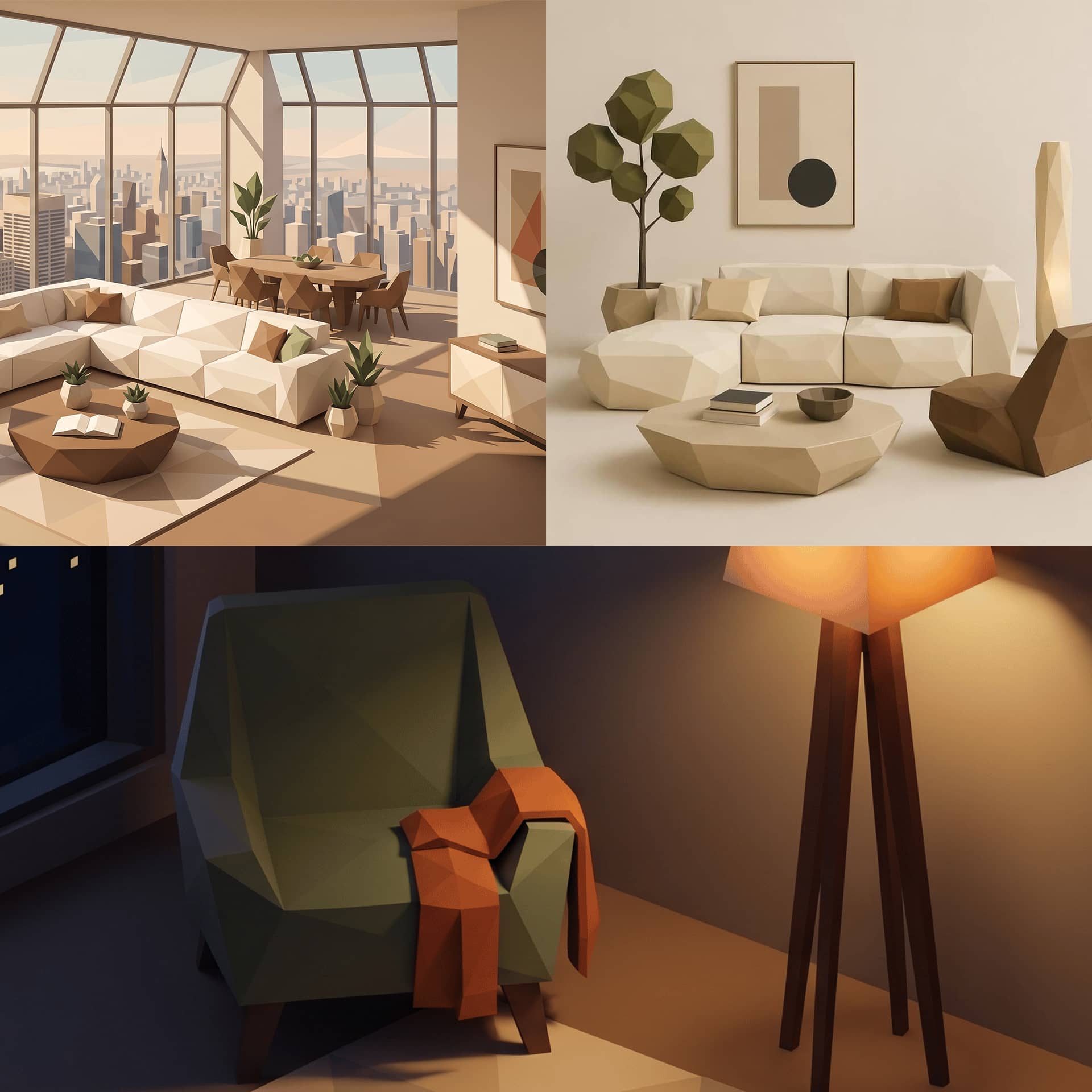
In the showroom the sofa was perfect: deep, low, big enough for four. At home it blocks the way to the terrace, the fireplace sits behind its back, and the only socket has disappeared behind the cushion. Now imagine the other version: a sofa turned just so, with the garden on one side and the fire on the other, a lamp at your shoulder and the whole family stretched out with room to spare.
Picture a family in a house on the edge of the Wienerwald, the Vienna Woods. The living room is large, with a wall of glass facing the garden and a fireplace on the end wall. The parents fell in love with a deep, low corner sofa on which all four of them could stretch out. At home they measure up and find that it fits, somehow. But the route to the terrace becomes tight. Anyone who wants to plan a sofa starts with exactly these questions, before anything is ordered.
Contents
- Why the sofa shapes the living room
- Sofa, size and room: dimensions worth knowing
- Planning a sofa for the living room: five steps
- Routes, views and the centre of the room
- Light, power and warmth: what is planned before the sofa
- Fabric, leather and acoustics
- Judging upholstered furniture: what matters
- What the costs depend on
- Frequently asked questions
- What happens next
Why the sofa shapes the living room
A large corner sofa can be three to four metres long and over a metre deep. It thus occupies a considerable part of the floor area and decides where you sit, where you look and how you move through the room. Table, rug and luminaires follow from it, not the other way round.
Then there is proportion. A low, deep sofa lowers the eye line, so the windows look taller and the room calmer. A high coffee table looks clumsy beside it, and a floor lamp that suits a classic sofa stands too tall here. A slim, upright sofa, in turn, quickly looks like a waiting-room bench in a wide room.
The sofa is where a living room is lived in. Everything else follows from it.
The first question is therefore not which sofa you like, but what is meant to happen on it. Do you lie stretched out in the evening, or sit upright with guests? Do you read, watch television, does the dog sleep alongside? What a living room looks like when the screen does not rule the space is described in the article on the living room without a TV wall. And which numbers matter once you know the answer?
Sofa, size and room: dimensions worth knowing
The values below are guidelines from planning practice, not standards. They depend on the model, the room and your height, and we always check them against the actual plan.
| Dimension | Guideline | Why it matters |
|---|---|---|
| Seat height | about 40 to 45 cm, deep models often lower | getting up comfortably |
| Seat depth for upright sitting | about 55 to 60 cm | conversation, reading, feet on the floor |
| Seat depth for reclining | considerably more, adjustable with cushions | leaning back, putting your feet up |
| Distance sofa to coffee table | about 40 to 45 cm | reach for a glass and a book |
| Main route behind or beside the sofa | about 80 to 90 cm | walking unhindered |
| Distance between conversation seats | up to about 3 m | you understand each other without shouting |
Seat depth is especially underrated. A deep sofa is wonderful for lying on, but smaller people sit uncomfortably on it without extra back cushions, and their legs dangle. Seat height is just as underrated: the lower and softer the upholstery, the harder it is to get up. Anyone who wants to stay in their home for a long time should keep this in mind, as the article on age-friendly living shows.
A sofa does not have to fill the room. If visible air remains between the sofa and the wall or window, it looks more generous than when it runs from wall to wall. In smaller living rooms in particular, a two-seater and a good armchair are often more fitting than a corner that blocks every route.
Planning a sofa for the living room: five steps
Before you decide on a model, a simple sequence is worthwhile. It costs little time and spares you the most expensive disappointment, namely a sofa that looks different at home than in the showroom.
- Write down the use. How many people sit on an ordinary evening, how many on a feast day? Is it for lying, reading, watching television?
- Draw the floor plan. Mark in doors, windows, radiators and sockets, plus all the routes that cross the room.
- Tape out the footprint. Mark the sofa on the floor with masking tape and live with it for a few days. You soon notice where it gets tight.
- Check the delivery route. Measure the front door, stairs, lift and door frames, diagonally too. In Altbau buildings (the pre-1945 Viennese apartment houses), large sofas often fail at the turn in the stairwell; modular parts usually solve that.
- Sit-test for long enough. Stay seated for at least a quarter of an hour, lie down and get up several times. Try it as a pair and in your everyday posture.
Routes, views and the centre of the room
In the house by the Wienerwald, the central question is: where do you look from the sofa? At the garden, at the fireplace, or both? With its back to the wall, both references lie to the side and the gaze falls into the empty middle.
The solution in our example is a turn. The corner sofa moves away from the wall, the long arm runs parallel to the glass wall, the short one faces the fireplace. Behind the sofa the route to the terrace emerges. A slim sideboard frames the back and takes books and luminaires. Tischlerkultur, our joinery workshop, makes such pieces to measure, in the language of the built-in wardrobes in the rest of the house. The room thereby gains a centre and two directions of view.
Picture it in October: the fire crackling, the last light going out over the garden, and nobody has to walk around anybody. A freestanding sofa does, however, show its back. Before buying, check how the rear is finished and whether it can be seen. In an open plan this back often takes on the job of a wall, as the article Kitchen, dining, living: zones instead of rooms shows. And how the garden extends the living room, you can read in the article on the transition to terrace and garden. But what does a sofa in the middle of the room need?
Light, power and warmth: what is planned before the sofa
A sofa in the middle of the room needs light and power where there is no wall. A reading light, a table lamp on the sideboard, a charging spot for the tablet: if you do not plan these beforehand, you live with cables across the floor. That is why we fix the sofa position before the electrical planning is finished, and place floor sockets where they will later be hidden. How this is thought through from daily life is set out in the article on electrical planning.
For lighting, it pays to distinguish three layers: ambient light for the room, accent light for walls and objects, and reading light right at the seat. With a low sofa the light source must sit lower, otherwise it dazzles or misses the book. More on this in the articles on the basics of lighting design and on choosing luminaires.
Warmth counts too. A sofa directly in front of the radiator holds back the warm air and stresses the upholstery. With underfloor heating, a large seating landscape should rather stand on feet than lie flat, so that the heat is not trapped beneath it. How such systems work is described in the article on surface heating and living comfort. Direct sun also bleaches many fabrics and leathers. On a large south-facing front you should therefore think of curtains or a suitably lightfast cover.
Fabric, leather and acoustics
Choosing the cover is a decision about feel, care and sound all at once. Fabrics of wool or linen absorb sound and make a large room noticeably calmer. Leather is easy to wipe and gains a patina over the years, but absorbs less sound.
For durability there is a figure you can ask about: the Martindale value measures a fabric's resistance to abrasion. It says nothing, however, about pilling, lightfastness or feel, so you should also take a large sample home. For families with children or pets, removable covers and dense weaves are worthwhile, because a stain then does not turn into a matter of principle. Thinking ahead pays off here, as the article When the family grows shows.
In the house by the Wienerwald, a warm-grey, textured wool fabric suits, complemented by linen cushions. A room with a stone floor and a large glass front would otherwise echo strongly, and the upholstery helps against that. The sofa rarely manages it alone, though. How rugs and curtains help steer the acoustics, you can read in the article on textiles, and the fundamentals of the topic in the article on acoustics in open-plan living. Then comes the hard question: what is good upholstery?
Judging upholstered furniture: what matters
Anyone comparing upholstered furniture in Vienna sees many handsome covers. The quality, however, lies largely on the inside, and you are entitled to ask about it in the shop. Check the following:
- Frame: Solidly built from solid timber or metal. Lift a corner slightly: a stiff frame hardly twists.
- Suspension: Springs or webbing carry the seat evenly, without you feeling the frame.
- Padding: Foam holds its shape and sits firmer. Down or feather fillings sit softer but must be plumped regularly. Blends lie in between.
- Seams and cover: Seams run straight and lie without tension, patterns match at the joins.
- Adaptability: Modules can be rearranged, covers renewed later. That prolongs a sofa's life considerably and is also an argument in terms of longevity.
The name on the label replaces none of these checks. How to judge quality independently of it is described in the article on quality beyond the name.
What the costs depend on
The cost of a sofa follows mainly the size, the number of modules, the build inside and the cover. A custom piece or an elaborate fabric increases the effort, and so does the lead time. Added to that are the things around it that are often overlooked: floor sockets, lighting, a bespoke sideboard, a rug of the right size, possibly a complicated delivery.
So do not weigh up the seat in isolation, but the whole living room. A buying decision made in the showroom alone has its own price: a sofa that blocks the route, a cable across the floor, an evening that never quite feels right, and all of it for years. It is often wiser to invest in a sofa that stays for twenty years and can be reupholstered, and to be restrained with the accessories. We talk openly about the budget from the first conversation, and with us one contact person accompanies the whole path from the first sketch to the handover.
Frequently asked questions
How large may a sofa be in relation to the room?
There is no fixed formula; the routes decide. Around the sofa the main routes should stay about 80 to 90 cm wide, and visible air should remain at the side towards the wall or window. With masking tape on the floor this is easy to test at home.
How far should the coffee table be from the sofa?
About 40 to 45 cm is the guideline. That way you reach the glass and the book comfortably, and your legs still have enough room. With a deep, low sofa the table should also be lower, so that it does not look clumsy.
What is the right seat depth?
For upright sitting, about 55 to 60 cm has proved its worth. Deeper sofas are comfortable for lying and leaning back, but smaller people need extra back cushions. It is best to try it in your usual posture and for long enough.
May a sofa stand freely in the room?
Yes, in large living rooms this is often the better solution, because routes and views become clearer. The back must then be neatly finished, and power and light must be planned in advance, for example through floor sockets. A slim sideboard can additionally frame the back.
Fabric or leather: which is better?
That depends on your daily life. Fabric feels warmer and absorbs more sound, which helps in echoing rooms. Leather is easy to wipe and gains a patina over time, but absorbs less sound. For households with children, removable covers and dense weaves are a good third option.
What do the costs of a high-quality sofa depend on?
They depend mainly on size, number of modules, internal construction and cover. Custom pieces and elaborate fabrics increase the effort. Lighting, sockets, built-in pieces and delivery come on top. A binding estimate for the whole room is therefore given at the first meeting.